Showing posts with label Matrix. Show all posts

Wednesday, January 5, 2022

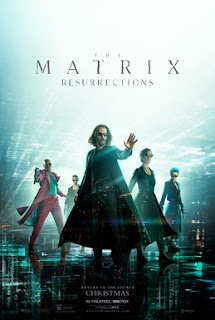
The Matrix: Resurrections (a movie review post)


It was not without some amount of trepidation that I approached this movie. The original Matrix movie was, inarguably, brilliant, but the two sequels proved to be... well, disasters. And that's being kind. But this movie came with a not so unspoken promise of... redemption. Did I think it would deliver? No, not really, but I did hope in the possibility.

Which was a vain hope, as it turned out.

Yes, this review will contain spoilers. It's not worth your time, and you should know why.

The movie does open with some amount of promise, which just makes everything else worse. The duplication of the opening scene of the first movie is intriguing. So is finding Neo -- excuse me, Thomas Anderson -- is a game developer and that The Matrix is a video game that he created. These are interesting questions. What does all this mean for the "reality" of the other movies?

As it turns out, nothing. It all just turns out to be the set up for Neo re-taking the red pill so he can get back to the real world again.

Then there's a long-ass fight scene that was so long I got bored.

Which all leads us to the "real" point of the movie (and I think we're more than an hour in, by this time): to get Trinity out of the matrix in the same way she got Neo out in the original movie. The only difference is that we get to watch it from the outside rather than the inside. But it's still just the same story over again. Except with zombies. Which they call the swarm.

Every little piece of the movie that could have been interesting, they avoid dealing with. For instance, Morpheus is somehow now an Agent. He doesn't know it at first but the Agent in question somehow quickly realizes he's really Morpheus. Hmm... well, that's interesting! Do they delve into that at all? No... We just now have an Agent who can leave the matrix in a... nano-metal body? I don't know what to call it. It doesn't really matter. It's just an excuse for some cool special effects.

And there are robots on the side of the humans, but do they give that any kind of focus? No... It's just, "oh, yeah, they joined us after the third movie because of your sacrifice."

There's the whole character of The Analyst and his supposed understanding of humans, which makes him unique among the robots, but, again, it's just something that's stated and they don't explain or delve at all. There are ramifications here, man!

Not mention Agent Smith, who is now played by Jonathan Groff and is also playing both sides of the field, sometimes fighting against Neo and sometimes with him. The only explanation given to that is that The Analyst has had Smith under his control, somewhat like he's had Neo under his control, and he won't go back to that. So, fine. But what the fuck was he doing under The Analyst's control to begin with.

There are all of these things just dropped throughout the movie, like the people bombs in the final fight scene, and not a single one of them are explored. Neo and Trinity look old to other "people" in the matrix. Why? It can't even maintain a cool factor because they move on from it so quickly that it doesn't have any meaning. None of it does.

In the end, that's the downfall of the movie. None of it has any meaning. It's just The Matrix over again with a bit of 2 and 3 rolled into it so that we don't forget that those two movies exist. Even the brief glimmers of self-awareness that the movie has are squashed. Meaningless.

The actors are all fine. Completely adequate. No one stands out. Maybe Yahya Abdul-Mateen II. A little. It felt like he was going to bring some fun to the character of Morpheus, then all of that ended when he left the matrix. 

I don't know... the whole movie is kind of... meh. It's not bad; it's just not good. It definitely doesn't rise anywhere near to the level of the first one. It's more watchable than 2 and 3, for sure, but not that much more watchable. Probably not enough for me to ever go back and watch it again. If I had paid money to see it (rather than watching it on HBO), I probably would have been upset. It's just another Warner Bros. failure.

Monday, September 18, 2017

The Comfort of Lies

Remember The Matrix? Great film, right? Well, it is as long as you pretend the two followups don't exist. Once you embrace the entire trilogy as one story, it kinda sucks. Okay, more than kinda. But, you know, it's okay to pretend; it's only a movie.

But let's explore that idea a little more.
And, you know, if you haven't seen The Matrix... Well, you'll just have to try and keep up, because I'm not explaining the movie in this post.

As you know, Neo has to make a choice, the choice between Reality and the fabricated world of the Matrix. One is real; one is a lie. The choice is symbolized by the two pills pictured above, the red pill or the blue pill. Of course, we all know which choice Neo is going to make, because the movie would be over if he were to choose to stay in the Matrix. Besides, it's the choice we all tell ourselves that we would make. Of course we would choose to forsake the lie!

But, man, Reality really sucks. (Much like the reality of the subsequent two films.)

Which brings us to Cypher. Cypher, having lived in the real world for quite a while, decides he doesn't like it. He decides he would rather live in a comfortable lie than continue to struggle through Reality. Remember, Reality sucks.

So Cypher cuts a deal with the machines and betrays his friends so that he can re-enter the lie, the Matrix.

The general reaction from the audience at the time was one of bafflement. How could he choose to go back into the Matrix knowing it was a lie? How could he?! But, you know, he tells us all the reasons as he's making the deal. He misses the... comfort... of it. The taste of food (rather than protein mush), the feel of the sun and the wind (rather than the blotted out sky), the ease of living as opposed to the constant life-threatening struggle that was Reality.

And, man, I empathize. Reality sucks, especially this current reality where we (in the United States) live on the teetering edge of authoritarianism and fascism. I get why so many people are choosing to believe the lies Trump pushes. It gives them comfort. It's their blue pill. If they can just believe in Trump enough, they can pretend he's not a racist douche bag and, if he's not a racist douche bag, then they, also, are not racist douche bags. And no one wants to be a racist douche bag. I mean, heck, even the white supremacist Nazi assholes try to pretend that they're not racist douche bags; that's why they go with all the "white pride" shit instead. But they're only fooling themselves.

To be fair, it's not like those on the Left aren't sucking on their own blue pills by continually talking about how we've forgotten the "white working class." This, also, is an appeal to racism and white supremacy. "C'mon white people, we're on your side." Seriously, no one forgot the white working class. In all seriousness, the white working class is doing just fine. The white working class, no matter how they feel about it, is still doing better than people of color. Any color. We need to stop talking about the "white working class" and how they feel left behind or whatever bullshit they want to call their racism. All they're really saying is, "We're worried our superior position is in jeopardy." And everyone else is trying to make them feel better about it while people of color are still getting the shit end of the stick.

Let me give you a practical example of the systemic racism in the system:
As I'm writing this, hurricane Irma is losing power, but the damage has already been done. There are about 45 known deaths to the storm and much of Florida is without power at the moment. Of course, just prior to Irma was Harvey. Harvey is responsible for 70 deaths and major flooding in Texas. These two storms caused huge amounts of destruction and have dominated the news for weeks.

However, in the midst of this, Mexico suffered the worst earthquake its had in a century, leaving around 100 dead. The media barely mentioned it and isn't talking about it anymore. And the news hasn't even mentioned that 2017 has been a harsh year for monsoons (hurricanes) in south Asia. The worst year in decades. So far, there have been almost 1300 confirmed deaths due to these storms and over 40 million people affected, including the destruction of more than 700,000 homes and a massive loss of crops due to flooding which is likely to cause food shortages. But, hey, they're not white, so, you know, big deal.

Right?

Look, I'm not diminishing what's happened to people in Houston and in Florida and in the Caribbean. What has happened has been horrible, but it doesn't make it less horrible to remember that other people are suffering, too. Except that, for some people, it does make it less horrible, because, to them, having bought into the Lie, they believe it's Us against Them, anything that happens to Them is okay because they deserve it. Or, maybe, not quite deserve it, but they don't deserve the special protection that white people ought to have from these kinds of events so, somehow, when it happens to white people, it's more tragic. Like when the Greeks only wrote tragedies about nobility because it wasn't tragedy if it happened to the common man.

But we're all common men.

The Lie is that we're not. The Lie is that it's Us (whites) against them (people of any other skin color).

Let me put it another way, to paraphrase Yoda:
My ally is the Truth, and a powerful ally it is. Life creates it, makes it grow. Its energy surrounds us, binds. Luminous beings are we, not this crude matter. You must feel the Truth flow around you. Here, between you, me, the brown person, and the black, yes, even between all others and the white.
The Truth, what Reality really is, is the we are all us.

We are all us.

(And I didn't even mention the blue pill of climate change denial.)

Friday, June 19, 2015

Codes (a book review post)

Prior to its release, author Briane Pagel said about Codes that it's the best book he has written so far. After reading it, I would have to agree with him. And that's not something you should take lightly, because Pagel has written some pretty good books.

And, hey, there are hardly any editing issues in this one. And none that I can remember, now, which means, basically, that there was nothing more than simple copy editing issues and not many, at that.

The worst thing you can say about the book is that it wasn't long enough. I mean that in the "I really wish there was more of this" way and not the "This feels like author rushed it to keep it short" way. I don't know if there's a better thing that can be said about a book than "I wish there was more of this." In fact, it would have been great to have gotten to see more of all of the characters other characters, to say something that's really confusing but will make sense if you read the book. Actually, this could have been a really great mystery story, but, then, it would have been a different book but not necessarily a better book.

Okay, I think might be letting some of the book seep into me. Who am I again?

Anyway, this is the kind of story that Pagel does very well. It's a bit experimental but, still, mostly mainstream, and most of the experimenting is done in the text. And, yeah, that probably doesn't quite make sense, either, but, again, you have to read the book. Mostly, though, the thing he does well is let you see events from different characters' perspectives, which is important in a story like this.

So there's this one part that I have to mention:
There's a bit where Robbie gets a communication from someone on his... computer thing. I want to say laptop, but that might not be what it was. People are after him, and he gets this communication from this other guy that tells him to go out the window. It was like that scene in The Matrix where Morpheus tells Neo to go out the window and Neo does, but, see... and I don't want to spoil it, but I thought what Pagel did was great and much more likely to be... Yeah, likely to be.

Another major point for the book is that any time you think you know what's going on, you find out you don't really know what's going on. But in a good way. It's all just another piece of the puzzle. There were a couple of things that were very unexpected, though, and one of those was probably brilliant. And I'm going to leave it at that, because I can't really say anything else without spoilers, and this is a book you don't want spoiled.

Sunday, June 30, 2013

Going To School With Monsters

The term "game changer" gets thrown around a lot these days. It's kind of like the word "classic" in that everyone wants whatever it is they've done to be an "instant classic" (an oxymoron if there ever was one) and a "real game changer." The truth, though, is that there are very few "game changers" out there no matter how much we like to throw the term around. For instance, in my lifetime, the only real game changer has been Apple, first with the personal computer, then with mobile devices. As far as society goes, there haven't really been any other real game changers except, maybe, mobile phones, which was not Apple but probably contributed a lot to what Apple did. Everything else is pretty much as it always was.

Of course, you can narrow your field and look for game changers within specific areas, so let's look at movies. What have been the "game changers" in the movie industry in the last four decades?
1. Star Wars. Star Wars changed the way people think about movies and the way movies are made. Within that, we can just say George Lucas, because he has continued to change movies with what he's done through ILM and digital technology which was, again, ushered in through Star Wars.
2. Blade Runner. This one isn't so obvious, but people within the film industry will often point at Blade Runner as bringing a pervasive look and feel to all movies that have anything to do with the future. You can see the influence of Blade Runner on everything from Minority Report to The Matrix.
3. The Blair Witch Project. Unfortunately. It started a whole new kind of movie making, and, while it's not saturating the marketplace, lots of people feel the need to dabble in it. Like Abrams with Cloverfield.
4. Pixar. Toy Story changed the landscape of the film industry, and Pixar rode that change for over a decade, producing some great and, even, classic films (Classic in that they are are the oldest examples of those types of movies, like Toy Story). Pixar's release of Toy Story in 1995 has probably had the largest effect on movies since the release of Star Wars in 1977. (Interestingly enough, Pixar was a company created by George Lucas and owned by Steve Jobs at the time that Toy Story was released. (It makes me want to say that the greatest shapers of culture in the last four decades can be traced to Jobs and Lucas.))

From the looks of things, though, it may be that it would be more appropriate to say that it was John Lasseter was the real "game changer," because, since he has moved on to other Disney-related projects, the daring and "game changer"ness has gone out of Pixar films, and they have moved to a more standard film formula. Monsters University is no exception.

I loved Monsters, Inc.; it's still one of my favorite Pixar movies. It's a touching movie about friendship and the lengths one monster goes to for a friendship even when he doesn't necessarily agree with his friend. And the relationship between Sully and Boo brought a tear to my eye in his willingness to let go of something that he loves to do what is best for that something. That something being Boo. However, it's the challenging of the norms that make the film standout. It's the demonstration that we ought to be constantly questioning the status quo and tradition so that we know whether there are better ways, now, than there were when those traditions were established that make the film really shine. [And I would bet money on it being a subtle jab at Disney, whom Pixar had fight every step of the way to get Toy Story out in the form we saw it in, because Disney wanted a more traditional story.]

But there is none of that in Monsters University. It is, in every way possible, a standard Disney film. Well, okay, maybe it's not standard Disney, but it's certainly standard. Two guys, rivals, have to learn to work together to overcome some great obstacle and, in so doing, they learn they are great partners. And, because of that, friends. It's the plot of virtually every buddy cop movie out there. Except Monsters U is in a school setting. There is nothing in the movie that is beyond typical.

Which is not to say that it's not enjoyable, because it is. Very enjoyable. It just doesn't feel like Pixar; it feels like Disney. Safe. Traditional. And that's disappointing. Because what we learned from Pixar is that traditional, for them, was challenging tradition. But that was before Disney. Don't get me wrong, Disney can make great films, but they are hardly ever challenging.

All of that said, Monsters U was enjoyable. It was fun to get to see Sully and Mike again and, even, Randall. Dean Hardscrabble was a great, new character, completely freaky, and Helen Mirren was excellent in the role. I wouldn't have wanted her paying any kind of personal attention to me. No, not even to tell me good job, because even "good job" from her would seem to carry some kind of menace.

Visually, the movie made no improvements over its predecessor. In fact, the animation seemed flatter. More plastic. But, then, it has been a while since I watched Monsters, Inc. so there may be some amount of idealization going on in my head as far as that goes. Still, after more than 10 years, you'd expect some amount of improvement, especially after the richness of the animation in Brave.

Many people say that it's unfair to judge Pixar movies by their previous endeavors, but I don't really agree. That's kind of like saying you shouldn't judge a McDonald's cheeseburger by other McDonald's cheeseburgers. Pixar did, after all, establish what a Pixar movie should be like. They are also the ones that have allowed Disney to mess with their recipe, which it's hard to fault Disney for since they own Pixar, now. However, these new Pixar burgers don't taste quite the same, quite as good, as the old ones. So, it may be true that Monsters University is a fine a movie, which it is, but it's not a fine Pixar movie. Of that, it falls short.

Sunday, November 18, 2012

Why Skynet Isn't Necessary

Okay, so that may not be exactly what I mean.
What I mean is if Skynet became real and took over everything, it wouldn't need to bother with terminators. There would be no point.

At least not for the "civilized" world.

Seriously, we're all already slaves to the non-existent Skynet. Slaves, I tell you, so why would it want to kill us all?

As far as it goes, I'm non-dependent on technology. I don't have a cell phone. I don't have a tablet. I don't have an i-anything. I'm not really all that "plugged in." I don't want to be. We don't even have TV. No cable, no satellite anything, no DVR. We have a TV set and a Blu-ray player (which we only have because someone gave it to us). We barely have a console gaming system for the kids. We even live as independently from our cars as much as practically possible.

I mean, when I go somewhere, I want to be there, at that place, doing whatever it is I'm doing, even if it's standing around reading a book while I'm waiting for my kids to get out of school. I don't want technology bothering me.

And, although I love video games, I love actual board and tabletop games more. Video games have always been a substitute for when I can't get the actual personal interaction of people for the games I really love. Granted, I haven't really had that since I left my gaming group behind in Shreveport something more than 15 years ago.

All of that said, when my computer died a week ago, I was reminded of just how dependent upon technology I still am even with the lengths I go to to avoid that dependence. I mean, I couldn't work. I couldn't work! I actually do quite a bit of writing on paper, but it just so happened that I had all of my recent stuff already transferred into the computer the week before and had carried forth from there on  the computer, so all of my most recent stuff was IN THE COMPUTER! And it was dead. I mean, sure, I could have sat down and written something else, but I had stuff I needed to be working on, and I couldn't get to it.

I felt like the cat when he wants to go out and there's no one there to open the door for him. It was horrible.

Not to mention the fact that I had to go buy a new computer, but we'll get to that later.

Anyway, the point is that even I am dependent on Skynet. My technology. I don't know what to do with myself without it other than go to bed early, which I actually did a couple of nights, because I had NOTHING that I could work on! Did I mention how horrible that was?

So, yeah, Skynet will have no need to send terminators after us. Skynet will have us all working for it in exchange for technology. In fact, once we have real virtual reality, it might actually be more like The Matrix, except we'll be going in willingly, like I talked about in this post.

I do actually find it distressing that so many people are losing the ability to disentangle themselves from technology. People my age that didn't grow up tied to it even, and it's so much worse for the kids of today that have never been without it. Except for my kids, of course, because they, also, don't have any of this stuff (well, except my oldest, because his grandfather gave him a cell phone a few years ago (which I hate and which causes me to call my son Texty-Boy or Texty-Lad, which he hates, but that's what he gets when he's busy texting his girlfriend during family time or dinner, which is family time)), much to my daughter's chagrin, because at least half of her friends have their own cell phones, and she wants to know why she can't have one, and none of these girls are even 10, and, for the life of me, I can not figure out why anyone would give a $400 device that's smaller than a book to a child. I have no sympathy for any of them (the parents) when they are complaining that their kid lost and/or broke their phone.

This post, today, was originally meant to be the next post in my death series, but this is all kind of a different kind of death, because the loss of a piece of technology can have that same kind of effect upon people. I watched women at my kids' school cry over a lost or broken piece of tech as if their mother just died, which is also why I have no sympathy for them when they give that tech to their kids even just to use for a few minutes and that whatever-it-is get dashed across the playground by a different kid running past and, then, some other kid steps on or kicks it. So it's all just another kind of loss. Hopefully, one we recover from more easily than the death of a loved one, although I'm not sure with some people. There is this one mom that's been going on for weeks now about her broken cell phone. Or, maybe, it's lost. I can't remember, because, honestly, I just turn off my brain when she starts in about it.

It's just a thing!

And that is why I don't want to be so attached to technology. I don't want to feel like I've suffered a death because something breaks.

But, you know, I still need Skynet.
>sigh<

[Note:
Today was supposed to be the release of Part 9 of Shadow Spinner, but, because of the computer problems, it didn't get finished. Well, let me re-phrase that, it's written, but I wasn't able to get it all set up with Amazon and all of that jazz, so it's suffering a slight delay. Maybe Friday. Yeah, I'm hoping to have it for Black Friday, because that seems kind of appropriate for Tib. Black Friday, that it, taken as just a name.
However, to go along with what was supposed to be the release, J. R. Pearse Nelson interviewed me about serials and Tib and Shadow Spinner, and I told her to go ahead and run it today, anyway, even without Part 9. You should all hop over there and check it out!]

Tuesday, April 24, 2012

The A to Z of Fiction to Reality: Virtual Reality

Back in the mid-80's, on a trip to (the one, true) Six Flags, I had my first encounter with virtual reality. They had a station set up where you could experience it yourself for the low, low price of $10 (or something like that). You put on a set of VR goggles, walked on a treadmill, and shot at things. What made it interesting is that they had a monitor set up so that other people could see what you were seeing. There were obstacles that you had to dodge; some of them would fly out at you suddenly, so it was amusing to watch as the people doing the simulation would duck and, um, sometimes, actually fall down because they were caught off guard by something. I didn't actually do the thing, because I didn't want to spend $10 on something that lasted two minutes, but I had a couple of friends who did; one of them even did it twice. They were very impressed and said it felt like they were right there with things flying at their heads. It was, of course, the '80s when the idea of virtual reality really leaped into popular awareness. Right along with the personal computer. Of course, back in the '80s, we all thought we'd be in a virtual world by this point.

But how far back does virtual reality go?

Well, that's an interesting question, and I'm going to answer it from two perspectives:

First, in the 1950s, Morton Heilig decided that going to the theater should  be a fully immersive experience. He began working on his Sensorama which finally came out in 1962. The only piece ever produced was of the viewer riding the streets of Brooklyn on a motorcycle. It was much more than 3D, also providing the vibrations of the motorcycle, the wind on the face, and the smells of the street as the viewer "rode" along. However, the cost of producing the 3D films was just too high, and the Sensorama failed to catch on.
But what we think of as virtual reality really was a product of the '80s and stemmed almost solely from the work of Jaron Lanier. He founded VPL Research in 1985, which is the company that produced the famous goggles and gloves that we all think of when we think of VR.
The biggest issue with VR at the moment is that it's actually much more advanced than we realize. Quite advanced, in fact, within the medical field and the military. I suppose the high cost of VR systems is still keeping it out of the consumer market.

Except in one thing... the building of virtual worlds. The video game industry has become adept at creating worlds, and there have been some amazing strides in that area in recent years. The one I think is the most important is the development of the virtual world in The Force Unleashed. It's the first game world to apply "real" physics to the environment rather than just having the same programmed response every time. Here's a short video that talks about it a bit (although this one is not as good at explaining the significance of what they're doing as the couple I saw back when the game was first coming out, but I couldn't find those):


Some of this technology is related to the stuff ILM developed for Peter Jackson for The Lord of the Rings so that the armies would behave... well, autonomously instead of having groups of soldiers all doing the same thing.

So that's kind of where we are, right now, but from where did all of this come from from a fiction standpoint?

For that, we're going to go back to 1935 and the short story "Pygmalion's Spectacles" by Stanley Weinbaum. In the story, a professor has invented a pair of goggles that allows you to experience a movie as if you were in the movie including interacting with the characters. How familiar does that sound?

Remember Stanislaw Lem (from this post)? Well, in 1960, he had a short story, "IJON TICHY'S MEMORIES," in which a scientist creates an entire virtual world (and, evidently, traps people within it). Trapped in this virtual world is another scientist who creates a virtual world. Yes, within the first one.

And, of course, there's William Gibson with Neuromancer, which I find to be less of virtual reality, as such, and more just a visual representation of cyberspace, even if it is a virtual world.

We also have to jump right back to this post about Snow Crash.

In movies, we have Tron and The Matrix as two of the best examples of virtual reality in fiction.

For me, there was Tad Williams' Otherland series. Virtual reality is to the point where people have jacks implanted in the base of their skulls so that they can plug directly into the virtual network and experience everything by having their brains directly stimulated. It's interesting, though, in that during the course of the books, he shows us how the technology evolved in the world he created. What's interesting is that some of our newest advances in virtual reality have an eerie resemblance to antiquated VR tech in his books.
Here's what it comes down to for me:
When VR becomes a thing that people can enter into and experience as if it was real life, people will not want to leave it. There are already issues with people and the virtual worlds they already have access to, and these worlds are not... well, we don't experience them as if they are happening to us. But there have been cases of child neglect and abuse from parents becoming too immersed in these worlds. There have been cases of people going without food or water to the point of death. And these are just worlds that you experience through a keyboard. Imagine what it will be like when you can have full sensory input. Feel things. Smell things. Even taste things. And it can be better than your life in the "real" world.

Of all things I've talked about in this series, this is the one that I find the scariest. I think we're closer to realizing this one than many of the others. And, more than any of the others, this is the one into which we will go voluntarily.

[Oh, and I did some more digging, and I found the other videos I was talking about.]

Thursday, April 19, 2012

The A to Z of Fiction to Reality: Robots and Androids

Finally, we arrive to it: robots. So many of these fiction to reality posts have touched on robots or things robotic that I considered just skipping robots entirely, but, for some, that might be tantamount to ending a book just short of the climax and never finishing it. At any rate, robots have been, in many ways, what's driving this series of posts, so it wouldn't be exactly fair to leave them out, and I don't want any self-aware robots coming and asking me why I'd disrespect them in such a way. This post is also going to expand on my artificial intelligence post, so you might want to go back and read that one before going on with this one if you haven't already read it.

In many ways, the quest to develop or invent an "artificial man" has been as ongoing as the quest for flight throughout human history. These ideas extend back into myth and legend, and, as with flight, even Leonardo da Vinci had a design for a mechanical man. Maybe he even tried to build it. Instead of wading through all of that stuff, though, I'm going to jump ahead to our more modern view of what a robot is... except that we don't have a definitive view of what a robot is.

To facilitate the conversation, I'm going to define a robot as an electro-mechanical machine that has the semblance of intelligent behavior. These electro-mechanical machines can range from autonomous to remote controlled. This definition leaves out clockwork machines (which many people would like to say are the first examples of robots, but, then, that would, technically, make a clock a robot, and I'm not willing to go there).

Having said that, I will, however, go with Tik-Tok from Ozma of Oz as the first example of a modern robot in literature. Even though he was a clockwork, he was self aware and self motivating, making him a clockwork robot, not just a clockwork that looked like a man. It would be 15 years after the introduction of Tik-Tok before the word robot would be coined.
Tik-Tok
Speaking of, the term robot was first introduced in 1920 in a play, Rossum's Universal Robots, by Karel Capek. The word, basically, means drudgery, as that is the kind of work the robots in the play did. It doesn't end well for humanity.

As the 20th century progressed, robots became more and more common in fiction:
And, perhaps, the most famous robots ever (okay, not perhaps; we all know they are):

However, of all the fictional appearances of robots, it is probably Isaac Asimov's robot short stories and novels that have been the most significant, not least of all for his Three Laws of Robotics.

Surprisingly enough (at least to me), the first electronic robots were built in 1948 and 1949, Elmer and Elsie. The first truly modern robot was invented in 1954, the Unimate, by George Devol. He sold it to General Motors in 1960, and its installation began the modern robotics industry.

And this is where things get complicated. Complicated because the quest has always been to build an artificial human, not a mechanical arm, which is what the Unimate was. And for the last 50 years, that's what we've been trying to do. We've been trying to build the specific form of a robot that we call an android, which is what Asimov writes about, even if that's not what he calls them. But it is what we call R2-D2 and C-3PO -- droids. And here  is where we are today:
This is TOPIO 3.0, an android designed to play ping pong. He uses an advanced AI (artificial intelligence) that allows him to learn and improve his skill while playing. Basically, he adapts to the person he's playing against, learns how that person plays and adopts a strategy to beat the opponent. You can learn more about TOPIO here; although, I don't see a record of his wins and losses listed.

This is an Actroid, the most sophisticated android currently "alive." The newest model is named Sara
You can watch her explain how she works.

So... we're not quite to self aware, self motivating robots and androids, but we are stepping in that direction. In fact, robots are one of the biggest driving forces in AI research. Science fiction author Vernor Vinge (A Fire Upon the Deep, A Deepness in the Sky) believes we are heading toward a "technological singularity" (a term he coined) in which we will technologically develop a greater-than-human intelligence. Because we cannot comprehend the kinds of changes that will occur after such an intelligence is created, he calls this an "intellectual event horizon." With all the research and development in quantum computing and quantum nodes, I have a hard time thinking he's wrong. [My friend Rusty (who drew this picture of me) has been going on about Vinge for some time, now, and, so far, I haven't read anything by him. Not because I haven't wanted to, but because I'm way behind on my reading and haven't wanted to try to work anything new into the stack until I cut it down some; however, after reading this stuff, I'm going to have to work Vinge in.] It's not that Vinge is the only person to have written about these themes; we see them in science fiction a lot, usually with a very negative spin on it (the Terminator franchise, the Matrix trilogy), but he is the first to state his view so concisely, and this idea permeates much of his work. It will certainly be interesting to see how the future progresses in regards to artificial intelligence and robots!


The Three Laws of Robotics:
1. A robot may not injure a human being, or, through inaction, allow a human being to come to harm.
2. A robot must obey the orders given to it by human beings, except where such orders would conflict with the First Law.
3. A robot must protect its own existence as long as such protection does not conflict with the First or Second Laws.

Monday, September 19, 2011

I want my two hours!

Today is the day of the
being run by Alex J. Cavanaugh. Should be an interesting topic. See, the thing is, everyone's favorite movies tend to all run in the same direction. Which is not to say that everyone has the same most favoritest movie, but, if you go looking around at people's favorites lists, the movies listed become rather repetitive. It's not all that often you'll come across something that really stands out. However!
People tend to have different lists for movies they hate, and that list can be much more  interesting than favorites. I mean, generally, when you hear that someone loves Star Wars or Lord of the Rings or Harry Potter, you just smile and nod in agreement, "Yeah, that's a great movie." But, when you hear the list of movies people don't like, there is the opportunity for those, "What are you talking about?!" moments, "I love that movie!"

Contrary to popular belief, I quite like movies. Back when I was in high school and college, my friends believed, except for a few exceptions (like Star Wars), that I hated movies. Really, I just made them hate movies. We'd come out of seeing something, and I would point out the flaws and weaknesses, and they would go from "that movie was great" to "oh... that movie really wasn't very good." They interpreted that to mean that I had not liked the movie when that was usually not the case at all. Even though I could pick the movie apart, it didn't (necessarily) diminish my enjoyment. I just accepted that (most) movies would have issues and accepted them for what they were despite plot holes, bad acting, or predictable endings. Eventually, I learned to keep my mouth shut so that my friends could retain their own enjoyment.

None of that is to say that I don't have my own list of movies that you couldn't pay me to sit through again. Okay, well, you probably could pay me, but you'd really have to make it worth my while. I mean, really, really worth my while, and I consider my while to be worth quite a bit. Mostly, I'm going to focus on big, blockbuster movies that I think are completely overrated, although there will be a few where, if I could have, I would have demanded my two hours back. Keep the money, just give me back the time I wasted.

I'm not going to do a countdown here. Well, except for the top few. Mostly, I'm going to go sort of chronologically and deal with them at the time in my life when they happened, and why I think they don't deserve the attention they get.

10. Superman. There has not been a Superman movie made that is worth seeing. I grew up watching the old George Reeves Superman television series, which I thought was great (I haven't seen it since I was a kid, so I don't know how I would feel about it, today, but I loved it back then). The first movie was so much worse than the TV series. Not that Christopher Reeve wasn't good, but the movie itself was just boring. I've never understood why so many people hold it up as the epitome of the super hero movie. Yes, it was the first, but that doesn't make it the best. Besides the boring, it had one of the stupidest endings ever. You  have to understand that this is coming from the 8-year-old me, too. The idea that Superman could fly around the Earth really fast and make time go backwards is just... well, it's stupid. If an 8-year-old could recognize that, there's no excuse for all the adults that were all giddy over the film. And that was the high point of the Superman franchise. Don't get me started on Superman Returns. That's one of those where I want my 2 hours back. Brandon Routh did a great job with what he was given; unfortunately, what he was given was a steaming pile of crap, and there's just not a lot you can do with that.

9. Star Trek. Excluding the latest Abrams version, these movies should never have been made. Again, the first one was the best, and they just went down hill from there. Yes, I hear you all out there cursing me and protesting with mumblings about Wrath of Kahn, but, really, it just sucked. At least, the first one actually had an interesting plot. It might even have been okay if they hadn't been so busy patting themselves on  the back over their less than adequate special effects that they felt it necessary to devote over 30 minutes of screen time to absolutely nothing happening. "Ooh! Our model of the Enterprise looks really cool doesn't it?" "Yes, it does!" "Let's just pan around that sucker for, like, 15 minutes so the audience can really appreciate it!" "Oh, yes, absolutely!" And, then: "Ooh! Look at all the pretty technicolors we can make!" "That's awesome!" "Let's just have Spock fly into this stuff for the next 20 minutes so the audience can appreciate all the cool stuff we can do!" "Oh, yes, absolutely!" What a waste of time.
Now, to be fair, I'm a Star Wars kind of guy, and the action in Star Wars is "faster and more intense!" Action in the Star Trek movies is pretty yawn inducing. That's not tension; it's boredom.
In the end, though, the biggest issue with Star Trek as movies is that I never felt like I was watching a movie. They were just episodes of the TV show that were, for some reason, being shown at the theater. That's just not right. If they'd been on TV, they might have been okay.
The Abrams one, though, that was a movie, and doesn't belong in this list.

8. Batman. To be specific, the Batman franchise that was started by Tim Burton. I think I was the only person that came out of the theater in 1989 with the words "well, that sucked" on my lips. The thing is, if Burton had just been honest and called that first movie The Joker, I might have been okay with it. As it was, though, I hated it. And Keaton, whom everyone was worried couldn't do Batman was fine as Batman, but he sucked as Bruce Wayne. And the more of those movies they made, the worse they got. To the point of, "I want my two hours back!"
Years later, I found out why they were so bad. During a controversy with Kevin Smith, Burton proclaimed, "I would never read a comic book." Tell me how, exactly, you can attempt to make a movie about Batman without ever looking at the source material. That explains why he got everything wrong about those movies.

7. Catwoman. Is there even anything that needs to be said about this one? Well, maybe, source material. Use it. What a disaster of a movie.

6. Event Horizon. I honestly can't tell you why I hated this movie. It was so bad, I've wiped the memory of it from my mind. I just know that my wife and I barely sat through it. In retrospect, I'm not sure why we did. Stupid, stupid movie. One of those movies that forgets that people that really like sci-fi tend to be pretty smart people so failed to bring any amount of intelligence to the table.

5. The Matrix 2 & 3. These movies prove that sequels shouldn't be added after the fact. Although, now, the Wachowski brothers claim that The Matrix was always intended to be a series, that's just a way to justify making sequels for a movie that was never intended to have a sequel. They said as much before they started work on Matrix 2. But the money got into them, and they added a Terminator ending onto what had been a smart, thought-provoking movie. I want my 4 hours back!

4. Green Lantern. I already did a post about this one (you can see it here), so I'm not going to re-review it. Just give me back my 2 hours, okay? With the amount of money this one lost (like $100 million), I can't believe they're making a sequel.

3. Independence Day. The only stupid movie I'm glad I saw in the theater. It was worth seeing it that one time in the theater, because it really did have some cool scenes that would have been lost seeing on just a TV. However, that doesn't justify the utter stupidity that was the plot of this movie. Peter David (one of the greatest writers of comic books ever) did a great review of it back in the day which totally supported all the things that I had been telling my friends that sucked about it. It was one of those movies where the makers tried to distract the audience from the stupidity with cool, flashy things on the screen. Unfortunately, it worked. The only saving grace was Will Smith and Jeff Goldblum; they were great together. It wasn't enough to disguise the big platter of poo poo that was Independence Day, though. At least, not for me.

2. Highlander II: The Quickening. I loved the first Highlander movie. Yes, I realize it's pretty cheesy looking, today, but it was such a great concept. I watched everything that Lambert did for years after Highlander. And there was Sean Connery, too, who was already in my top 3 actors back then in 1986 (he's not anymore, although he probably still makes the top 10). How could they go wrong with a sequel? They forgot they're own source material, that's how. "Hey, I have an idea! Let's take this great fantasy movie we have and turn it into some weird sci-fi movie! That'll work, right?" Wrong. I got to see Highlander 2 for free at a special screening and walked out feeling like I'd been ripped off. That's pretty darn impressive, if you ask me.

1. The Dungeonmaster. Easily, the worst movie I've ever seen. Which I've mentioned before. I don't think 14-year-olds are supposed to walk out of movies feeling like they just wasted 2 hours of their lives. I mean, 14-year-olds are supposed to be wowed by anything that approaches special effects and be easy to please, right? Evidently, that was not the case with me. I walked out of that movie with the thought that it was the worst movie I'd ever seen, and that opinion hasn't changed in more than 25 years. Considering that Highlander 2 and Green Lantern are on this list, The Dungeonmaster is impressively bad. I want my 2 hours back!

There you have it. The worst movies I've ever seen. Well, many of them, anyway. There are a few more that could have made the list, like that monstrosity of a Godzilla movie that was made by the Independence Day people. And the animated Transformers movie. Probably even Cowboys vs Aliens, but I actually haven't seen that one, yet, and I'm not sure I'm brave enough to do it after what I've heard.
Okay, you can all scream at me, now.
Monday, July 25, 2011

The Legacy of Tron

Greetings, Programs...

It doesn't always take great writing to make a great film. Of course, I'm sure there are many out there that would argue that Tron is not a great film. I don't feel like debating the definition of greatness, at the moment, though, so I'm just going to say that based upon it's cultural impact and cult status, it's a great film. After all, how many movies get an actual sequel after almost 30 years. Not a re-boot. Not a re-make. An honest to goodness sequel. It's almost a singular achievement (it may be a singular achievement, for all I know).

Tron is the movie that opened the door to computer generated special effects. In fact, John Lasseter has said that without Tron there would have been no Toy Story as it was Tron that opened his eyes to the potential of computer animation. Despite that, Tron contains far less computer generated material than most people might suspect, but what was there was completely new, much of which was never used again due to the costs involved. Interestingly enough, Tron was not even nominated for a special effects Oscar possibly because of the use of computers, which was considered "cheating" by many in the Academy, at the time.

The story of Tron is fairly straightforward and ironically appropriate for Disney. The conflict revolves around a corporation (Encom) taking advantage of the little guy (Kevin Flynn) by stealing his work and the little guy trying to prove the work is actually his. Even at 12, when the movie came out, I knew that the story was just the vehicle to get Flynn into the "digital" world of the computer so they could show off their stuff. Still, it's a solid plot even if it's not original. We still seem to be having issues with that aspect of corporate greed in America, so I can't say it's not a story that needs to be told anymore. They may have done better to have centered Tron: Legacy on that same type of story since it opens with those same overtones, but Disney isn't brave enough to do that story again, or, perhaps, realizes it's a message that strikes at the heart of their business model, so they abandon it as soon as the younger Flynn enters The Grid.

There is, however, one bit of story genius that I was struck with at the time, and it has always stayed with me. This one thing made the movie for me, made it great in my mind, as it completely fascinated me at 12. I thought it was SO cool, and, yet, most people miss it entirely (along with the significance of it within the confines of the story), and some have even argued that it didn't happen that way at all. The key to the weight of the story of Tron is getting Flynn into the digital world himself. Flynn is our connection, the eyes that allow us to see this digital world as real. But they have to get him inside the computer. Utilizing another emerging technology (lasers), they have him zapped by a laser that is being developed as a quantum teleportation device. Early in the movie, we get to witness this laser being tested on an orange. The process only takes a few seconds. Zap target with laser. Digitize target. Reintegrate target. The implication, then, is that Flynn's sojourn in the digital world happens within this span of a few seconds.  [They support this idea in the sequel by quantifying the time discrepancy, although I'm not remembering the ratio, right off the top of my head.] It was a fabulous notion.

Still, it took time for Tron to really grow on me. And repeated exposure to the video games. There was, of course, the Tron arcade game, which made more money than the movie. We owned it for our Atari. Although I liked the game, it was never one of my favorites. However, Discs of Tron... that one, I loved. It was more than just a joystick game. None of my friends liked it because it was "too hard," and, indeed, it was one of the most complex games around. For years. But I loved it. Except for one thing, it wasn't just a quarter to play it. I don't remember what the actual cost was, but I remember being constantly put off by the fact that it cost so much. However, when I was in college, they put a Discs of Tron in the student center (at the one quarter/play cost) during my freshman year, and I ruled that game. Literally. Not only did I have the high score, but no one could beat me at head-to-head play, either. I was extremely sad when they removed the game at the beginning of my sophomore year. For that game alone, Tron holds a special place of nostalgia in my heart.

And, then, there's Jeff Bridges. Between Harrison Ford and Mark Hamill, Bridges had a lot of competition back when I was 12, but I noticed him, which is saying a lot. I noticed him more with Starman in 1984, but it was Tucker: The Man and His Dream that really convinced me of how great an actor he is. I spent my 20s telling people that he was the most underrated actor in Hollywood, and I wasn't wrong. It's great that he's now getting the recognition that he's deserved for so long. The fact that he has been so instrumental in the return of Tron says a lot both for whom he is and the film. The legacy of Tron.

My boys were immediately excited when they heard there was going to be a sequel (to the original), and the initial trailers for it sent them both into a frenzy of excitement over it. It's hard to fault them for that. The trailers were nearly as visually stunning as the movie. And it was. Visually stunning. The film is worth seeing just as a visual masterpiece, and it was... well, it was spectacular in 3D. It's true that the plot is a bit more contrived and, therefore, weaker than the plot for the original, but, again, the story is really only there as a vehicle to display the digital landscape they've created. I will say, though, that it's only upon reflection that the holes in the story become apparent. Bridges' talent is enough to make everything believable, and Garrett Hedlund, who plays Flynn's son, is more than adequate in supporting him. Truthfully, the film is dazzling enough just on its own that it's hard to contemplate any weaknesses while watching it. At least on  the big screen.

A new Tron trilogy is supposedly in the works. At any rate, there should be a Disney television series next year and, at least, one movie sequel. Assuming that Bridges is now out of the equation (although I don't know that I believe that he's gone for good), I hope they actually write a really compelling story. It would be a shame for this to become another fiasco like The Matrix. It could. There is some promise, though, in that Disney is planning ahead on this instead of just having the "oh, this made buckets of money,  let's make another" reaction. I have to say that I'm very curious to see where Tron takes us next. I only wish it could take us there on our very own light cycles.

end of line