Showing posts with label freedom. Show all posts

Monday, December 13, 2021

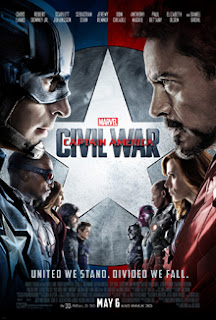
Captain America: Civil War (a movie review post)


MCU #13

Civil War may be the best of the MCU movies. Philosophically, it certainly deals with the toughest questions. What do you do when personal freedom clashes with societal security? How important is loyalty in relation to your ideals? What is the cost of friendship?
It's a tough movie.

The one drawback to Civil War is that you can't really come into this one as your first MCU movie. They do a decent job of filling in enough gaps for the audience to understand what's going on but, minimally, you need to have seen Winter Soldier and Age of Ultron to really understand the context of what's happening. Of course, if you have seen the earlier material, it makes this movie all the richer, but I can see it being a barrier for someone coming in.

There's so much in this movie, in fact, that it can't be covered in a simple review. So much so that in my original review (which I am not going to link for this very reason), I glossed over the plot and focused on the acting introductions in the film. I'm not going to apologize. The acting in this one is stellar, and the newcomers deserved some notice. This time, I'm going to focus only on the central question: Should we abandon personal freedom in favor of safety and security?

Tony Stark says yes. He says keeping people safe is the highest good, and giving up your autonomy is a worthy sacrifice for that goal. It makes sense that he would say that. He suffered a severe trauma in the first MCU movie when he had his own personal safety violated. Everything he has done since then has been in the service of keeping people safe. Including the creation of Ultron.

And the creation of Ultron and the disaster which followed is one of the motivators for what happens in Civil War. Tony realizes he needs some oversight, while putting it in the context of the team having oversight. As if that would have prevented Ultron. Because we all know that, oversight or not, Ultron would have happened anyway, because Tony is going to do what Tony is going to do no matter what kind of oversight is in place. To say that it's ironic is an understatement.

Steve Rogers says personal liberty is more important. Which also makes sense considering he fought in a world war against fascism. He has also served under other people's agendas and knows what that's like and that, frequently, those agendas don't uphold the common good and/or are more concerned with the exploitation of others. Most importantly, having to wait for other people to debate a situation can take so long as to make the situation something which cannot be responded to. And, this, I found more than a little amusing because Stark uses this same basic argument with Banner as to why they should not consult the team before pursuing Ultron.

Here's the thing: They are both right. To some extent, at any rate. People should be allowed to make their own decisions and live their own lives but, yes, we also need laws and rules to act as safeguards. But where do you draw that line?

I don't have that answer for you.

And neither does the movie.

Steve, because he is inherently a good guy, always looking out for the well-being of others, willing to sacrifice himself for his fellow man, doesn't need the Accords and, so, he is against being tied up by them. He's going to do the right thing, even if the whole world says he's wrong. I get that. I've been that person standing up against hundreds of people saying "what you're doing is wrong" while the people in charge tell you that you just don't understand the whole situation. Basically, Steve doesn't need the Accords because he's already doing his best to live up to the spirit of them.

And he believes that people should be allowed the freedom to make the same choice that he has, not have it enforced on them. Will people actually make that choice? Probably not, but they should be given the chance.

In many respects, it's a movie without a bad guy. Unless you want to count General Ross, who is definitely not a good guy, and Zemo, who is a bad guy but an understandable bad guy and not actually the cause of the central conflict. Throw in Black Panther and Spider-Man and you have one helluva movie. I'm tempted to leave Avengers at #1 because of all the backstory that Civil War requires, but... if I were going to sit down and watch any MCU movie right now, it would be Civil War, even though I just watched it.

So, then, the new rankings:

1. Captain America: Civil War
2. The Avengers
3. Captain America: The First Avenger
4. Captain America: The Winter Soldier
5. Iron Man
6. Ant-Man
7. Thor: The Dark World
8. Thor
9. Guardians of the Galaxy
10. Avengers: Age of Ultron
11. Iron Man 3
12. Iron Man 2
13. Incredible Hulk (Thanks, Norton, because of you, they kicked Hulk off the whole planet.)

Tuesday, February 4, 2020

Half a Century of Thoughts -- part two

I have a lot of mixed emotions when I look back at my childhood. On the one hand, there was incredible freedom. I was largely left to do what I wanted to do when I wanted to do it, other than going to school and being home by dark. No great hardships since I didn't dislike school and there was no one to play with after dark. Of course, I didn't feel that way about it at the time, the freedom part, much like I didn't feel anything about my ability to walk or do anything else. It just was.

I spent as little time at home as possible, most of my weekends being spent at my friends' houses.

Which is where the mixed emotions come in. My friends didn't want to come to my house anymore than I wanted to be there. Not that I really understood that at the time. Except for one friend who left crying the first time he ever tried to stay the night at my house. My (step)dad started yelling about something and scared him, and he had to go home. He never came to my house again, though I spent many, many weekends at his. I didn't get that that was the same reason none of my other friends wanted to come to my house, either, and why I always stayed at theirs.

And the freedom I had was negligence. My parents rarely knew where I was or when or if I'd be home, not that I didn't ever not show up at dusk. Unless I was spending the night with someone, but my mom, at least, always knew that because I would actually ask for permission. Of course, there was that one time... That time I ran away.

My mom knew that I ran away, since I did it because of some fight. I don't remember what happened other than that it ended with me yelling, "I'm running away and never coming back!" I made the best effort at it I could being a spur of the moment thing. I walked around the block three or four times trying to figure out where I should go. I realized fairly quickly that I couldn't go to any of my friends' houses because their moms were friends with my mom and I'd just get sent back home. Likewise, I couldn't go to my grandparents' house... though maybe I could have for a while? I don't know. I didn't try it, but it's possible they wold have let me stay. At the time, that didn't feel like an option.

[One note: When I mentioned in the previous post the "house I grew up in," that was my grandparents' house. At least, at this point. But I'm not going to explain that right now.]

In fact, it felt like I didn't have any options. So I sat down under a tree on the corner of the street I lived on so that I could think. And I thought about it for hours. So many hours that it got dark and I had come to no conclusions about where I could go, but I was determined to not go home. What was the point of running away if you just went back home? Eventually, a car came up the street and stopped next to me. The door opened and my mom growled, "Get in the car." Unfortunately, it didn't occur to me to refuse on the grounds that I had run away; I just got in the car and we drove backwards down the street to our house.

I think the "running away" thing is emblematic of my childhood. Maybe of all of GenX. Sure, my mom came after me, but she got lucky. If I had been some other kid, some kid who didn't think things through and need a plan, I might have just walked off randomly through the city and never been seen from again or, at least, not without the intervention of the police. And let me be clear, this was not one of those "teaching moments" from a sitcom where a kid declares s/he is going to run away and the parent helps said kid pack and plan until the kid realizes that running away isn't a good idea. This was my mom not caring enough to do anything about it, and it doesn't matter that she believed I wasn't really going to do it, because, clearly, she was wrong about that. If she had bothered to ever know me as a kid, she would have known that I wasn't in the habit of making idle threats. It's not like "I'm going to run away!" was a thing I said on a regular basis.

The problem here is that she didn't bother to worry about me, or even wonder about me, until it got dark and I didn't come home. She just went about her business. And my dad(step) didn't care at all. It was never mentioned, and he took no action or acknowledged that anything had happened.

The number of times I almost died as a child is appalling. I mean literally almost died. Like the time my cousin and I got stuck in what can only be called quickmud and didn't realize we were in any kind of danger until we were literally in it up to our mouths and only barely got out (because she used me as a surface and pushed me all the way under so that she could get her hands on the bank and pull herself out). Or the multiple times I was chased my water moccasins while out playing in the woods so far from anywhere that no one would have known I was dead. It physically distresses my daughter almost any time I talk about things from my childhood. Which is what made me realize that there were things wrong with my childhood. Prior to that, to me, it was all just normal.

Not to mention that my mom would just give my stuff away because she felt like it. Seriously, I would come home and stuff from my room, stuff I loved, would just be gone. It was always, "Oh, I gave that to so-and-so." She didn't have any reason; she just did it. And my wife's mom would do the same kind of thing only she would throw things away.

And the Boomers are still doing that shit, even at this very moment. Fighting to protect the most corrupt "President" (#fakepresident) of all time so that they can continue to hold onto everything. Stealing the future from their kids and grandkids so that they can continue to bloat themselves. And they don't fucking care! There's a reason that Gen X has been the first American generation to not surpass their parents in wealth and success, because Boomers are like Shelob in her cave sucking the life out of everything that gets near them.

Of course, the problem is not just the Boomers. Mostly, Gen Xers have responded just as I did when I ran away. Boomers pull up in the car and say, "Get in," and we do it. Why? Because the Boomers are in the right? No. I'm pretty sure my mom was not in the right about whatever the disagreement was. My dad(step) was never in the right and my mom only rarely. No, we do it because they're our parents. We don't even think about it, not until it's too late.

And, you know what, it's too late. Or pretty damn close to it.
And we keep letting Boomers tell us what to do.

Monday, December 11, 2017

A Pocketful of Marbles

Remember marbles?
Not, do you know what is a marble, but do you remember marbles? Like from when you were a kid. Back when marbles were magical and sprang into existence through spontaneous generation and you only acquired new ones by finding them, trading for them, or having some benevolent Being gift some to you. When I was a kid, I did, in fact, have a special bag just for marbles. And acquiring new marbles was always cause for trading with my friends, some of whom also had marble bags though some just had jars.

Marbles were like trophies. When you're a kid, trophies also are like magical totems that come into existence for the sole purpose of being awarded to kids who have risen to the level of trophydom. After all, you can't buy trophies at the store, so they must be special. Unless, you know, there are special trophy stores... which there are... but you don't find that out until you're older. Like that whole Santa Claus thing.

But marbles! Marbles were better than gold. Of course, mostly, you could only trade them for other marbles... unless you had some super-cool marble, and, those, you could trade for almost anything. They were magic baubles. You could do a lot when you were a kid with a pocketful of marbles.
Not so much anymore, probably, but the philosophy is sound.

Because, in the end, marbles are worthless. Just bits of polished glass.

Dazzling, polished glass.

Right now, Republicans, the voters, are being dazzled by these bits of polished glass. GOP congressmen have filled their pockets with marbles and are trading them for your freedom. For our freedom, and you Republicans keep handing us over to them in exchange for shiny baubles that mean nothing.

They offer you a wall to keep out all of those dirty illegals,
and you give them your healthcare.

They offer you a tax break,
but they raise your taxes so that the rich can continue to get richer.

They offer you jobs
but give you a ruined environment.

They offer you guns
but give those to you as mass shootings, because the US is #1 in the world in mass shootings, the GOP is determined to keep us that way. After all, America has to be great at something, right?

They offer you marbles,
and you give them your freedom.

Unless your idea of freedom is the freedom to pay them more money. For everything.
Because that's what the GOP is all about, pricing the poor out of life and making slaves of them. And if you're not super rich, you're the poor. In the Republican world view, there is no middle class, and they're doing everything they can to siphon all of that money up to people who already have too much.

So if you're a Republican or if you vote Republican, especially if you voted for Trump (#fakepresident), I hope you have fun playing with your marbles. Maybe one day you'll open your eyes (or get your heads out of your asses) and see that you gave away everything of value for a few bits empty promises and polished gas.

Monday, July 31, 2017

1984 (a book review post)

I first read 1984 in 1984. I was in 8th grade, and I suppose my teacher thought it was appropriately timed, though I do think 8th grade was the normal time to have the book assigned anyway. Maybe. At any rate, I remember reading the book and having thoughts like, "Isn't it great that someone wrote such a great warning for us so that this can never happen here." And that seemed to be the consensus, even from the teacher: This will never happen here.

Oh, how wrong we were.

No, I'm not saying we're full on living in Big Brother world, but, in many ways, we have taken our first steps toward it. And I'm not just talking about how we're (the USA) the most surveilled nation on the planet, either.

Here's an example:
In the book, the proles (the mass of common people) are kept uneducated, just enough education so that they can do the menial labor jobs they need to do. This serves multiple functions, but the primary ones are that the uneducated tend to question authority less and do as they're told more. It makes them unquestioning of their lots in life so that they don't rise up in revolt. When they're told that their lives are better than the people's of days past, they accept it and are thankful.

For the past several decades, the Republicans have been working at undermining education and preaching the worthlessness of education to their followers for these exact same reasons. When they tell their followers something like "the Republican healthcare bill is better for you than Obamacare," their followers swallow it whole and think it's yummy because they don't have the facilities to question what they're being told. The Republicans have discredited science in favor of dogmatism, and that's straight out of 1984.

At this point in my life, though, the thing I probably find most interesting about the book is the stuff about language, because Orwell has been proven, yet again, to be ahead of his time. The idea of Newspeak in the book is to reduce language to a point where things like freedom and equality aren't even concepts, and we, today, tend to think that that's kind of a dumb idea. I mean, you can't get rid of concepts, right?

Well, let me give you another example:
Anthropologically speaking, all cultures started out with only two colors: light and dark, or white and black, depending on how you want to say it. Other colors didn't exist for those people. You might think that's crazy talk because, if you look out the window, clearly, you can see a whole range of colors: blues and greens and reds and all of these colors that are just part of our world. Clearly, those colors exist, right? Well, sure, from an objective, scientific standpoint, those colors, the wavelengths for those colors, exist, but those people didn't see those colors, not the way we see them; conceptually, they were just lights and darks. But over time, other colors got added in, and it was actually an expansion of the world for those people.

See, here's the thing, and this is a science fact: Language changes our brains. How we speak and what we speak affects our brains and how we see the world and interact with the world. Learning other languages and new patterns of speech changes the "wiring" in brains and causes us to see the world differently. [So does reading, by the way.] So this concept in 1984 where they remove the ability from people to think of freedom and independence by removing the concepts from the language is not very far-fetched. It's not far-fetched at all.

And, hey, Trump is doing a great job of reducing language. And rewriting facts and history to suit his own agenda, another thing covered in the book.

I mean, it's like the GOP read 1984 and decided that they could use it as their own, personal playbook.
"...a hierarchical society [is] only possible on a basis of poverty and ignorance."
That sounds like them to me.
"...human equality [is] no longer an ideal to be striven after, but a danger to be averted."

So, yeah, this book is still vitally important and everyone should be reading it. The thoughtpolice, though not quite real in the sense they are in the book, are growing in power, and a huge segment of the population have fallen under their sway and believe every fabrication and alteration that comes out of their mouths. Right now is a time for clinging to facts and truth and upholding them because "reality" isn't as objective as we'd like to think it is. In fact, reality is only as objective as we make it, and we can't allow Trumpism to bend and warp the truth of the world around us into the madness he'd like to make it.

Monday, June 5, 2017

The Voice of Freedom

There's been a lot of talk in the last six months or so about the lack of leadership in the Democratic party, which is true. When Obama left office, he also stepped away from any and, seemingly, all roles of leadership. And that's too bad, because he's the closest thing to a unifying leader the Democrats have right now. But, honestly, it's not a lack of leadership that's the problem.

It's the lack of a voice.

And I don't mean the lack of a voice for the Democratic party; I mean the lack of a voice for Freedom. The Voice of Freedom, right now, is silent.

Which is not to say that there are not rumblings from it, but, so far, since the rise of Trump, no one has picked it up and shouted it with a unifying Voice as key individuals have done in the past:

Abraham Lincoln
Mahatma Gandhi
Winston Churchill
Martin Luther King, Jr.
even Ronald Reagan with his stance against communism in the 80s

Sometimes, that voice is sung, as it was in the late 60s by people like
Bob Dylan
Peter, Paul & Mary
Simon and Garfunkel

Or in the 80s by
U2
The Alarm


Today, the Voice of Freedom is silent and needs to be picked up as a unifying cry against the Voice of Fear that Trump continues to spew out of his horrible maw in the same way that Hitler did.

See, the Voice of Fear is loud and has provided a rallying point for Conservatives (because studies show that Conservatives are more prone to fear and have a much greater fear of change (and, let's face it, the times they are a changin')), and they have responded to that call with a vengeance. A vengeance which includes white supremacists feeling like they have been empowered to murder and terrorize and that that is somehow patriotism (to use the words of a white supremacist terrorist).

Not to go all Star Wars on you, but the Voice of Fear is the Dark Side. It's not more powerful, but it is quicker, easier, more seductive. People like quick and easy and don't like or want to put in the work for Equality and Freedom.

And, just to be clear, the Voice of Freedom is also the Voice of Equality, because real Freedom, true Freedom, cannot exist without equality. The equality of all people to have the same access to healthcare. The equality of all people to have the same access to education. The equality of all people to have the same access to opportunity. The Voice of Freedom, the Voice of Equality, is the Voice of the People.

The Voice of Fear is the voice of slavemasters, those who want you to put up and shut up and just do as you're told. It's time to throw off Fear.

"We want to play for you now a gospel song. A gospel song with a restless spirit."
It's time to pick back up the Voice of Freedom, the Voice of Equality, and sing it and sing it loud.

Monday, September 12, 2016

Since When?

Facebook has a lot of things going on that we don't know about. It's not that facebook is actually trying to hide this stuff, it's just that it's not right out in the open, and, well, no one ever really looks. Of course, we all agree to it by being on facebook to begin with, so it's not like you have any right or grounds on which to complain. If you don't like it, don't be on facebook.

But I digress as all of that is really beside the point. Or behind it. Or something. I only bring it up because what I'm about to talk about came out of one of those "hidden" facebook things.

Unsurprisingly, facebook labels you in different ways based on the kinds of things on which you click through and all sorts of ways. A lot of it has to do with advertising so that their advertisers can target you so that they're sending ads to people who might actually be interested in them rather than just whatever to whomever and hoping something sticks. One of the labels they attach to you has to do with how you lean politically.

Yeah, I checked  my label.

It said "machine wash, hot."
Oh, wait! Wrong label.

Oh, yeah, I know what a lot of you out there are thinking: "We don't need you to tell us your label. We all know you're one of those crazy, hippy liberals." Well, as it turns out, not quite. See, there are three categories: liberal, conservative, and moderate. Makes sense, right? And I fully expected to get pegged in the "liberal" category. But, no, my label... You want to know my label? "Very liberal." Not just liberal but "very liberal."

It's funny, because I don't feel "liberal." What I feel like is someone who believes that all people; independent of their race, sex, sexuality, financial status, whatever; ought to get a fair shake. What I wonder is this: Since when did that idea become "liberal"? Because I have a hard time with the idea of people being treated fairly and equally being a liberal idea. Not today. Today, that ought to be the norm.

Why?

Because we use the Declaration of Independence as one of our founding documents, I'd like to point out a few things. All men (mankind) are created equal, not just white men and not just rich men and not just rich, white men.

All men have the right to life, which does not include being shot dead by people working for the government, especially not for walking down the street or driving your car.

All men have the right to liberty. I'm going to say that as freedom. People have the right to choose how they want to live. As long as you're not hurting some other person, you should get to live the way you want to. And, honestly, I don't understand why this is even a thing. What you do in your own house is your own business (as long as it isn't beating your kids or your spouse). Or it ought to be. I don't want you coming in my house telling me how to live, so I shouldn't be going into your house telling you how to live. That's a metaphoric "I," people.

All men have the right to pursue happiness. Again, as long as it doesn't mean harming someone else or denying someone else their right of life or liberty. You get to decide what makes you happy and pursue that thing and, just because that is not a thing that makes me happy, it doesn't make it okay for me to tell you that it shouldn't make you happy.

These do not seem like "liberal" ideas to me. They seem like fairly decent human ideas. But let's take it back some more. Now, if you are a Bible believer, you have to get the whole part where God created man to be free. See, the angels were not free, and God wanted some piece of creation that would have freedom of choice. The freedom to live as that piece of creation would choose to live. So it seems to me that the people who should be most invested in protecting the right of choice for individuals would be Christians. Or "Christians," if we're speaking politically.

Not to mention that it should be Christians most in support of social programs that help the poor. Seriously, what do they think it means when Jesus said, "Feed my sheep"? But that's really a different topic.

The point is that I don't feel liberal, certainly not "very liberal." Which is not to say that I feel conservative, because I don't feel that, either (although I think I did actually feel conservative when I was young and growing up in the South). I don't think of myself in those kinds of terms.

As I said, I do think of myself as someone who believes that people deserve and should receive equality. Equal opportunity. Equal pay for equal work. An equal chance at life, liberty and the pursuit of happiness. My wife frequently says I'm the best feminist she knows, but I don't think of myself that way, either. I'll say equalist. I believe in equalism.

And, again, as the title says, since when did that idea become liberal?

Monday, July 20, 2015

Reading Is Power

I was having one of those thought things recently, and I want to point out that it was just a thought thing. A thing like "I wonder if there's a connection here" kind of thing. Of course, since I'm about to talk about it, I think there is a connection, but my wife tells me I'm wrong about this one. But, hey, it's my thought, and she's just telling me that because I don't have any data to back it up. And, it's true, I don't have any data to back it up (she's a real data person), but, what's more, I'm not going to do the research, right now, to figure this one out, because it was just a thought thing.

However, it all makes sense to me, so I'm going to go with it. I mean, I'm going to go with it at least as far as I'm going to talk about it as an idea. It's not like I'm putting this forth as law or, even, as any kind of fact.

It does make me wonder if there's any data out there about this, though, or, even, how one would go about figuring it out. It doesn't make me wonder enough, though, to do the research.

So, anyway, here's where the thought began:
Reading Is Power

As someone who reads, this seems like a pretty obvious statement to me, but let me re-frame it by walking you through a bit of history.

For centuries (at least) only the wealthy have been able to read. Well, the wealthy and the priests, but there was wealth in the priesthood even if not controlled by the individual priests. And not just the wealthy but, more specifically, wealthy men. I'm not just talking about European culture; this has been prevalent across all cultures for thousands of years.

Now, an argument could be made that it's the wealth that created the power, but I think it was the ability to read. I think the reading created the wealth and the wealth was used to maintain the power. Books were expensive, so it was, then, easy to keep reading out of the hands of the "common man."

Over time, the power base expanded as reading was taught to those few who became successful enough, or wealthy enough, to be able to buy the knowledge. Remember, for hundreds of years, schooling only went to those who could buy it.

Eventually, though, education had to become more widely available because of a growing need for skilled professions (doctors, lawyers, even skilled laborers). And, then, an American guy had the startling idea that education should be available for all, and thus was born the public education system.

An interesting thing happened after that: Women started reading. I'm not trying to suggest that no women ever read prior to that, but, after public education, reading became available to women en masse. And, not long after that, women began to demand the right to vote. With the ability to read, women gained power.

Likewise, when under privileged minorities have learned to read, they have gained power.

When people in countries of oppression have learned to read, they have gained power.

It's through reading where ideas like "freedom" and "democracy" are spread.

Ideas are power, and ideas come from reading.

And here is where my thoughts lead me:
It is often widely bemoaned how boys don't read anymore and, when I say "boys," I mean white males in the USA. Reading has fallen out of fashion for white males and, as such, the white male power base has been eroding for years. Or decades. White men in power are gnashing their teeth about all sorts of things that are undermining their power. Like women. And "minorities." And "gays." And whoever else they complain about.

Well, I think it's their own fault. The white males, that is. It's their own fault that power is slipping from their grasp, because they have largely given up on reading and learning and are doing all they can to foster a society that thrives on ignorance, "faith," and a lack of education (the ability to read). White male leadership continually undermines the power of reading and science by clinging to... well, all sorts of things that have no factual basis.

Why?

Because they don't read.

So I don't feel bad for them that they are all fearful of losing their grip on power, because people who cling to ignorance don't deserve to lead.

Monday, January 21, 2013

Deliberate vs...: A Post About Thinking (Part One)

Before I start, I just want to say that I'm not talking about anyone in particular in this post (and the next). In all actuality, I have no way of knowing what sort of thought processes any of you have. I'm speaking in generalities based on studies of people and how people tend to be. If you feel personally offended by anything I say here, I just want to point out that it's not me pointing that finger at you; it's you. I can't do anything about that.

This post is not about gun control or about guns at all other than that it is a response to a comment from my Freedom Line post, so I don't want any comments about guns or civil rights or anything else even if I mention that conversation, which I will. If you want to comment about guns, go read that other post and the comment thread there and make your comment on that thread. This is not a conversation about guns.

However, during that conversation, I was told that I was having a knee-jerk reaction to the recent child massacre and that if I would only apply reason to what I was saying I would see that I am wrong. If only I could approach the subject intellectually rather than emotionally, I would find a different answer to that question. The problem, then, is that my post was not based off of any kind of emotional reaction at all. Beside the fact that the views expressed in that post were not new to me, I waited weeks to make that post so that I would have time to get my thoughts in order (rather than the next day (or the same day) as many other bloggers did), just as it has taken me two weeks since that comment was made for me to get my thoughts in order to make this post. I just don't make rash comments.

Let me add here that this is something about me that often creates... issues... between my wife and me. She will ask me something and want a response right then, but I just don't have one for her. I have to think about almost everything before I respond to it. This goes for movies and books and, well, everything. On top of that, I can almost always separate my emotional response from my actual views about an individual topic (you can see my recent review of An Unexpected Journey for an example of that). Most people respond like this:
"I don't like this thing; therefore, it is bad," or
"I do like this thing; therefore it is good."
I talked about that stuff here and also in some other post that I'm not going to keep looking for right now. At any rate, those things are not necessarily the truth. 2/3 of my kids don't like broccoli, but I'm, like, 99.7% sure that broccoli is not just good but very good. Whether they like it or not.

Having said all of that, there are two basic ways that people "think" about things, two ways that people arrive at conclusions and decisions: one is what we would call decisive, but that is more because of an incorrect perception that decisive also means "quick," which it does not; and deliberate, which involves more time and actual thought before coming to a conclusion. In all actuality, what we call "decisive decision making" involves almost no thought at all. It's all emotion and "gut" instinct.

Guess which one is the most prevalent. And guess which one we, as a culture, hail as superior. Yeah, "decisiveness". Culturally, we are ALL over that shhhtuff, like a fly on it. How prevalent? Oh, probably something like 80% of people arrive at what they believe about a subject based on this model of "thinking." Or maybe I should say non-thinking. 80% (It might be as low as 70%, but many studies indicate a number higher than 80%, possibly as high as 90%)! That means that most people just respond to things without ever bothering to actually think about the outcome.

So, yeah, most people that responded to the child massacre in Newtown by yelling "No more guns!" did so as an emotional response to the situation. However, most people that have responded to that by yelling "You can't have our guns!" have responded in the same way. Neither side has invested much thought into the issue. From that standpoint, both sides are wrong. [I am personally horrified (emotional response) that gun stores are now complaining that they can't keep supplied, right now, due to the rush of people to buy more guns and that the specific weapon used to murder those children is the item in the greatest demand. Not that I don't understand the compulsion, but you can't tell me those people are acting rationally.]

I should also add that virtually all of the decisions that lead to the housing bubble and the economic collapse of 2008 were made by these 80% of people [this is not my opinion; there have been many studies on the causes of the economic collapse and every single one of them points to bad, "positive" decisions]. In many cases, the people actually evaluating what was going on and saying things like "this is a bad idea" or "we need to slow down," the people waving the red flags back in '06 and '07, were fired outright. Well, let go. They were told they were no longer needed and to take their "negativity" elsewhere. Why? Because we love people that will quickly arrive at a decision and act on it right then at that very moment. Don't stop to think! Just do it! We call those people decisive and hold them up as the epitome of how to be. Don't show doubt. Don't evaluate. Just react.

The problem with that is that in almost every study done, these people are shown to be wrong something like 70-80% of the time. Because they don't bother to stop and engage their brains, they come to the wrong decision. Do the wrong thing. And they take everyone else with them. And, yet, we continue to hail these people as heroes and follow them blindly in almost all circumstances. It's like... it's like deciding that the person you're going to cheat off of in math class is the kid scoring 30% on his tests because he's failing in such a self-assured manner.

This phenomenon baffles me to no end, and I'm sure it's what leads to mobs. No one wants to listen to the guy saying, "Hey, this is a bad idea!" And no one, and I mean no one, wants to be that guy. It sucks to be that guy. I know, because I grew up being that guy. You end up being the guy standing alone while everyone else goes off to do something stupid. Sure, later, they come back and say, "Man, you were right. We shouldn't have done that." But it doesn't keep you from being alone.

Maybe it all has to do with patience; I don't know. Most people don't have any, and that leads to bad and wrong decisions. Maybe it's just that most people aren't that smart. That sounds bad, because, by definition, most people are of average intelligence. I'm not one of those people (which is not me being arrogant, it's me stating an objective truth based upon actual data (which I will not go into right now)). Unfortunately, it sometimes (sometimes more than sometimes) causes me to look down on people of average intelligence as being less intelligent than they actually are, if that makes any sense. I do try to control that, though, and I'm much better than I was when I was in high school.

At any rate, I'm not one for jumping to conclusions, because I just don't jump. I have to gather evidence and look at all sides of a situation, and, sometimes, I'm never ready to come down conclusively on an issue. This is usually because I don't feel that the evidence from any side is conclusive enough. In that respect, I'm not the best at giving a definitive answer about things, contrary to how it might be seen on here at times, because I want room to accept new information and modify what I think about a subject based on new information. This, also, is contrary to how most people are. Post-high school (and certainly post-college), most people (much greater than 80%) will completely dismiss new information about a subject they have previously arrived at a conclusion about. It makes me sad, because it's the thing that has caused the huge political and religious divide in our country. It's also why, generation after generation, you typically have the young pitted against the old, because the old just will not accept that there could be anything new to add to what they know.

All of that to say that if more people would just slow down and actually look at the evidence, both sides of the evidence, or, maybe, all sides of the evidence, we might not have such a huge gap in our world. I don't see that happening any time soon, though.
Next time, the three types of decision making processes.

Monday, January 7, 2013

The Freedom Line

To borrow a line from Spider-Man:
With great freedom comes great responsibility.

But what do you do when some people show that they can not or will not be responsible with the freedom given to them?

That's a tough question and not one I see an easy answer for.

Where do you draw the line between freedom and security? Because, see, I'm all for freedom. Seriously. I believe in it. And I want my own freedom, although you might not be able to tell considering I have three kids. And that's kind of the point, kids bring a responsibility that contain an inherent restriction to Freedom. It's part of the package, and, if you're not ready to give up Freedom for Responsibility, you have no business having kids.

And some of you might be saying, "Yes, but I don't have kids, so why can't I have complete Freedom?" And that is a good question. Honestly, as long as your expression of Freedom doesn't interfere with someone else's expression of Freedom, theoretically, there should be no reason you shouldn't have complete Freedom.

But let's look at that for a moment...

Your expression of Freedom shouldn't and cannot interfere with the Freedom of others. That means your Freedom cannot harm other people. And you might be thinking, "Well, that's just not fair." But is it fair when your Freedom of driving as fast as you want to drive causes an accident that kills someone else? Is it fair when your Freedom to take whatever you want causes someone else not to be able to eat or not to be able to feed his kids? Is it fair when your Freedom to smoke cigarettes results in health issues for other people? Sorry, it's not fair, and these are examples of why we have laws that govern freedom. To help us know where the exercising of our Freedom can cause harm to other people.

And, so, some of you may be thinking "what does this have to do with my Freedom (and Right) to own guns?" And that, also, would be a good question.

I'm gonna sort of change the subject for just a moment but not really. It will only look like it. I just want to start at a different place and bring us back to the same spot. The same question, so to speak.

Jesus came to set us free. I know this because He said it. Most people think this means He came to set us free from sin, that he came so that we could more perfectly follow the Law, but that's not what He said. I'm not going to break down all of the scriptural passages at this point, because it would take too long, so to sum it up, Jesus replaced the Law with Grace. He gave us Freedom, the same kind of Freedom that existed in the Garden before Adam ate of the fruit and introduced the Law (by gaining the knowledge of Good and Evil). [Yeah, I know this is a bit deep and metaphysical, but hang with me for a few minutes.] Basically, what Jesus was saying was, "Look, you can't really do all of this stuff. It's crazy to think that you can, and the Pharisees are crazy for thinking they can. What you really need to do is love God and love people, and, if you do those things, you'll be okay." Basically, forget the Law.

Okay, so we're in a state of complete Freedom at that point. We can (kind of) do whatever we want. Some of the early Christians really went with this, too. There was a movement that Right and Wrong no longer existed and anyone could do whatever s/he wanted to do. The problem was, evidently, these people didn't care whom they hurt in the process. Freedom was their Right and by God they were going to exercise that Freedom.

Paul came along and clarified some things at that point and said, basically, "Sure, in theory, you guys are correct, you can do whatever you want to do, but you shouldn't. You still need to respect other people, because, if you don't respect other people, you aren't showing them love, and Jesus said to love them just like you love yourselves." Even Peter had a problem with all of this stuff, because he realized (with God's help) that he didn't have to follow all of the Jewish dietary restrictions; he could eat just like the gentiles. And, boy, did he go hog wild (pun intended) with it. The problem was that he started bragging about it, and some of the Jews that didn't believe the way he did started having issues with the whole thing.

Paul had to step in there, too, and slap some sense into Peter: "Look, Dude, you know it's okay to eat pig, and I know it's okay to eat pig, but all these other guys... they don't know that, yet. What you're doing is messing them up and making them do things they believe are wrong. You're hurting them." Essentially, what Paul was saying is that eating pig for these other guys was wrong because they believed it was wrong.

And this... this is a really sticky issue, the difference between what is right and what is wrong, and it's why there is such a huge divide in the USA, right now. Some people, a lot of people, still believe that eating the metaphoric pig is WRONG. But that's actually beside the point.

Because the real point is this, and this is where we go back to those other questions I was asking up above:
Paul said that the way to deal with this issue of how to behave when you believe that something is okay but someone else does not is not to do it. If what you want to do, even if you believe it's completely okay and right to do, is going to hurt someone else because they believe it's wrong, you should give up your Freedom to do that thing by taking up the Responsibility to act in a loving manner to that other person so that other person will not be tempted to do something s/he believes is wrong.

In the pig example, a lot of the Christian Jews started eating piggies because they saw Peter doing it, but they all believed it was wrong, that it was a sin, so they were wracked with guilt over it. The point is that, for them, it was wrong to do because they believed it was wrong to do (and I'm gonna stay away from anymore of the relativity of good and evil in this post). Peter needed to stop eating pork (at least when he was with other Hebrews) and quit bragging about it so that he wouldn't cause his fellow Jews to stumble over their own beliefs. We're not all at the same spot in the journey.

Do I think you should have the Freedom to own a gun? Sure. Do I think you should have the Freedom to own any kind of gun you want to own? Sure. I believe those things as long as you are going to be responsible in your Freedom to not hurt other people. To not take away their Freedom with your Freedom (because none of us have that Freedom, especially the freedom to end a life).

The problem here is that too many people in our society currently cannot use their freedom to own a gun responsibly. Too many people are being caused to stumble and do wrong because they have the freedom to own a gun. Too many people are taking away other people's freedom by doing them harm. Clearly, these people are just like the Jews that saw Peter eating pork and ate it too even though they believed it was wrong. To keep these people from doing the wrong thing, according to Paul, we should willingly lay aside our freedom so that they will not do what is wrong. We should choose Responsibility over Freedom.

And that's kind of where I come down on this whole gun thing at this point. I look at my kids and I wonder which is the higher Freedom: your freedom to own a gun or my kids' freedom to live. I look at all the kids and wonder that. What was the higher Freedom, the lives of 20 kids (and half a dozen adults) or the Right (Freedom) of one person to own some assault weapons? I ask that question all the time. What is my Freedom worth?

I have to tell you, I have laid aside an awful lot of Freedom for the sake of my children. I have laid aside an awful lot of Freedom for the sake of other people's children. I don't have a problem with this. I get that some of you do, but I have to wonder if you're looking at the issue from the correct standpoint. If my Freedom is going to cause someone else to screw up, I need to go to the higher place of Love and abandon my Freedom. Why? Love God and love people. If I'm willing to sacrifice other people so that I can get to do whatever it is I want to do that certainly isn't Love. If I'm willing to sacrifice your children or, even, my own children, so that I can live the way I want to live, that certainly isn't Love.

And, you know what, that extends to owning firearms. If other people cannot act responsibly within their Freedom to own a gun, then we all should be willing to lay aside that freedom so that those other people will not screw up. Just like we have to sacrifice the freedom of driving as fast as we want to drive to prevent accidents and just like we have to sacrifice the freedom of taking whatever we want because it harms someone else and just like... well, I could go on and on.

Is your freedom to own a gun worth the life of someone else? Just one life? Is it? Really? I see some of you out there right now saying, "Yes, it is." Well, whose life is it going to be? My kid's? Your kid's? Your brother's or your mother's? Is it worth it now? If you're out there and you're willing to sacrifice the life of someone dear to you just so that you can own a gun, let me know. Because it may not actually be someone dear to you, but it's going to be someone dear to someone else, and, tell me, is that fair? Is it?