Showing posts with label editing. Show all posts

Monday, August 8, 2016

"Barachiel" Revised (or Done Or Raw)

 Barachiel
I mentioned recently that I lost a computer. As in, it passed away. It gave up the ghost. Well, if computers have ghosts to give. It kicked the bucket. Or whatever passes for a bucket. It went to the light. I know, because it quit making any of its own. It gave its last gasp. Which I actually heard. It's in cold storage, now. Literally. The hard drive is. It's in my freezer, kind of like Walt Disney, waiting for a day when it can be resurrected. Or, at least, have its data carefully removed like donated organs. I just can't afford that transfer, right now, because all of the "normal" means of data retrieval didn't work.

But this post isn't about that. Go back and read the other post if you want to know more about all of that.

I spent most of July restoring documents from other sources. That's an adventure, let me tell you. [Okay, it's not, really. It's like the complete opposite of an adventure.] One of the things I could not just restore from another source was "Barachiel." I actually had to buy "Barachiel" and re-type it from my Kindle. Which is the point of all of this...

There's a reason authors (and other artist types, I would assume) declare things to be finished. It's not because they are finished, not necessarily, but because there's a point when you have to decide to quit working on something because you are no longer making any notable changes to the piece, whatever kind of thing that is, from a painting, mural, short story, or novel. As my wife would say, "Done or raw, do the chaw."

Supposedly, that saying comes from Texas and passed down to her from her grandmother who grew up there. I, too, grew up in and around Texas, though, and I never heard that saying until my wife said it. I still think it's kind of weird. And, yes, Texas is a big place, and her grandmother grew up in a different part of Texas than I did. But I digress...

"Barachiel" is a good example of all of this, because, as soon as I started re-typing it, I started fiddling with it. Not that there was anything wrong with it, because there wasn't -- okay, actually, I caught two errors: one missing space (after a comma) and one missing letter (leaving only an "a," which can be a difficult error to catch, sometimes) -- but, now, even just a few months after writing it originally, there were phrases that, I suppose, I wouldn't say quite the same way. Evidently, that's true, because I changed some. And I added in a few things here and there. Why? Because I was looking at it again, and I couldn't help it!

That's why we declare projects finished and we don't go back to them!

Seriously, I couldn't help tweaking! [Tweaking! I said tweaking!]

It was right there in front of me, and it just happened.

If I picked it up two weeks from now, I'm sure it would be the same. And again two weeks after that.
Why?
Because we always change, and the phrases and words change, too.

So, no, there is nothing significantly different about the revised edition of "Barachiel," but, just because, I'm going to make it FREE! for a couple of days. If you've already read it, you can get the new version and compare and, if you haven't read it, here's your chance to get the ever so slightly improved version. For FREE!

So, yeah, go pick up your copy of "Barachiel" today!
And, as always, please leave a review!

Friday, January 30, 2015

A Shot in the Light: parts I-IV (a book review post)

You can find my review for part one, "A Flock of Ill Omens," here.
You can find my review for part two, "In Short Supply," here.
I had intended to review parts three and four separately, but, before I got finished with part three, the individual parts became unavailable, so I'll be reviewing the first collection with a focus on parts three and four, since I haven't talked about them, yet.

The first thing I want to note is that the editing fell into a sinkhole or something somewhere between parts two and three. I believe that I noted in my review of part one that it was pretty clean but, by part three, it was like having the maid who doesn't do windows. In other words, the grammar and punctuation errors started getting in my way of seeing the view. Now, I will admit, editing issues stand out more to me the less I'm enjoying something or, to put it another way, I more easily overlook those kinds of copy-editing issues when the story is compelling. There was nothing here by part three to keep me from noticing every single error, some of them the kind of errors that shouldn't have existed to begin with. Example: Periods and commas NEVER fall on the outside of a quotation mark. If you look above to the links I've included, you can see that the commas, even though they are not part of the titles, are within the quotes. That's the proper way to do it. That should be a simple thing, and the increasing volume of people punctuating only outside of quotation marks is becoming troubling, and it's not something I expect to find in the work of an experienced author.

The other thing that was tiresome was the overuse of the past perfect and past perfect continuous verb tenses. I'm not sure exactly when this started happening, but I started noticing it in part three. The chapters started beginning with these elaborate thought flashbacks of everything that had been happening to the character since the last time we'd seen that character. For instance:
He'd left the apartment before everybody got up, deciding there was no better time to get the lay of the land. He'd started with Fort McPherson, an Army base he'd been to for Special Forces training twice upon a time, so the sense of familiarity had given him an advantage when he went to see what was going on.... Once he'd made his way onto the grounds, he'd stood in the trees to watch for a long time.
That goes on for almost that entire chapter, telling us everything very passively after the fact. This is the very definition of "telling" and not showing. There's no tension, because we know everything already happened from the character's perspective and he's just thinking through it all. Not to mention that passive storytelling just grows boring after a while.

 And I'm not even going to mention the fact that "army" and "special forces" shouldn't be capitalized. Oh, wait...

Now, I'm going to jump back to an issue I mentioned in part one, because it comes up again part three: the use of bug bombs to sterilize living environments. It bothered me when it was done in part one because, really? I mean, don't you think that if we could use bug bombs to kill viruses on open surfaces that we would be using bug bombs to kill viruses? By "we," I mean hospitals and health care people. For all I know, there are "normal" people out there who do use bug bombs in this way, and I bet they wonder why they still get sick. But I digress. After it happened in part one, it was possible that it was a misconception of the specific character; I didn't believe that, but it was possible. In part three, some other character wants to do the same thing, so it became apparent that it was an author issue as it seems to be common knowledge among all of the characters (who are all supposed to be intelligent and accomplished). This kind of research flub really bothers me.

And it's not the only one.

Also back in part one, one of the characters finds an office complex full of people who died from the flu. It was like they all got sick at once and died before any of them could get home. Or to a hospital. Or anything. This is after the author has already shown us other people with the flu being sick for long periods before succumbing, so I didn't understand why would have this building full of dead people. But I reserved judgement on that in case there was something else going on. However, by part three, finding office complexes full of dead people has become kind of normal, and it makes me wonder, again, if the author did any research beyond watching The Walking Dead. People don't get the flu and drop dead from it a few hours later. Employers don't keep people at work who are puking and running high fevers. This idea that there would be whole office complexes of people who died because they got too sick to leave is just.. wrong. Poison gas, maybe, but not any kind of disease. Biology just doesn't work that way.

On top of the scientific inaccuracies, one of the main ways the author moves the plot forward is by having the (supposedly intelligent) characters repeatedly doing stupid things. Like sneaking out alone. In fact, in part four, every main character but one sneaks off alone at some point and, each time, something bad happens. It became too much for me and, again, made me think of shows like The Walking Dead and Breaking Bad where stupidity is substituted in for personality so that the author(s) can move the plot forward. That was actually the breaking point for me, that all of these characters kept doing this stuff. Actually, it was all because of one character: Sydney. She sneaks out after someone else who has sneaked out, and she has no good reason to do it. The author prompted her by giving her a "bad feeling," but it was so that she would be there to rescue Theo when the bad stuff started happening. Sorry (not sorry), but I hate contrived plot points.

Honestly, it was a struggle for me to get through part four of A Shot in the Light. I only did it because I had previously stated that I would give it through part four. All of the issues with the story that I mentioned in my first two reviews are still present along with the issues that have been added in. So that's it for me. I won't be continuing to the next part or collection or whatever is next.

I will point out again, though, that the writing is fast-paced and there's a lot going on in the story. For most people, the grammar/punctuation issues are not going to be a problem. And, maybe, details like the bug bombs won't be an issue for most people, too. Based on the other reviews for "A Flock of Ill Omens," I have to assume that that is so. I do have a mild curiosity as to what is going on "big picture" in the book, but it's not enough to prompt me to struggle through the rest of the series.

Friday, September 26, 2014

A Flock of Ill Omens (a book review post)

"A Flock of Ill Omens" is the first part of the 10-part serial release of A Shot in the Light. If you decide you want to try it, you should pick up the compilation of the first four parts of the series because it's the same price as part one all by itself.

Having done a serially released book myself, I have a soft spot for the idea of serials. I think they have a lot of potential. As a first part of a serial, I think this does its job adequately. In that, I mean it draws in the reader and makes him want to know what's going on. As in me.

However, with me, that's not all a positive. There are some things I just have questions about. Technical questions. As in, "Is this part of the story or did the author fail to do adequate research?" So, basically, I'm holding my breath and waiting to find out. It would be normal for things to not make sense at this stage in the book, so I'm reserving judgement on the things that have caused questions for me.

Oh, except for one thing, because I'm pretty sure it was a one-off. At one point, one of the characters wants to decontaminate a house. He's afraid of a bio-hazard (which could just be a flu virus), and he's trying to eliminate it. He opts to buy a bug bomb, the kind you can buy at the grocery store, under the assumption that it will kill all living things in the house, including viruses. Um... That's not how bug bombs work, and the character should have known that, considering his profession. I get that the bug bomb made for a convenient way to "zap" the house, but unless they've started making some that actually irradiate their immediate environment, a bug bomb's not going to do more than get rid of some roaches and fleas. Maybe a mouse or two. Maybe.

The writing is pretty fast paced, possibly a little faster paced than I'm actually comfortable with. Things frequently felt rushed to me while at the same time having no actual results. I think that's probably in line with current conventions, though, so most people will probably feel very comfortable with the pacing. What I'm saying is that the writing style is probably a plus in a general sense. It wasn't a negative for me, but it also didn't do anything for me.

And, because it's me, the editing:
The editing was pretty good. Mostly, there aren't any issues. Except for the one that is my current pet peeve: the misuse of dashes. I've talked about dashes before, so I'm not going to go into a whole rant about them other than to say that I wish people would actually learn what dashes are for rather than using them by feel. But, then, when you have someone like L'Engle using them to start paragraphs, I suppose it's understandable that there would be confusion about the purpose of dashes as punctuation. [Just to point it out, starting a paragraph with an m-dash is like throwing your commas at the beginning of your sentences. It's just wrong.] Anyway, other than the dash-abuse, and that wasn't rampant like I've seen in some books, the editing is pretty tight. Definitely well above average for a self-published book.

I already have part two set up on my Kindle, so, see, I'm still reading. However, considering that I'm also still reading L'Engle's time books, I don't know if that actually says anything significant. But these are way better than those. I mean, I'm willingly going to read part two, not out of some weird obligation to finish like I have with the Time Quintet. For the moment, though, I'm giving this a C rather like I did with The Skin Map, because I need to see where it's going and what's going on before I can make a better judgement than that. If it hadn't been for the bug bomb thing, though, I might have gone with a B.

Tuesday, August 12, 2014

Revisiting the Abandoned

As some of you will know (maybe most of you?), back in April, I did Abandoned Places as my A-to-Z theme. Alex wanted to know more about what went into that whole thing: where the idea came from, how I found the places, what kind of research was involved; so he asked me a bunch of questions about it. Because I'm (mostly) a nice guy (depending upon what day of the week it is (or whether you're asking my kids)), I answered them. You can see the whole thing over at the Blogging from A to Z Challenge blog, so you should probably hop over there and read that.

* * *

A while back I announced that I have a new thing coming out... um... I want to say soon, but my kids and back-to-school have completely derailed my process these past few weeks and, although I have finished writing it, it is mostly still only written in pen. None of which is the important part. As I said back when I announced this, I'm looking for a backup short story to go along with it. While I've had a few people express interest, I've had no one give me a firm commitment, as in "Hey! I have something written, and I would love for it to appear with your story!" So... If you have something written and you'd like for it to appear at the back of my vague and undescribed story, let me know. [If you're interested, I will tell you what the project is, but, otherwise, it's a secret until it's ready to go.

* * *

Speaking of new things, the new issue, the August issue, of Indie Writers Monthly is out!
There's tons of good stuff in each issue. Unless you're actually trying to weigh it, in which case, you'll find it's a bit hard to grasp being virtual and all that. My article in this issue is all about editing and softball. You should definitely check it out!

* * *

Just a reminder: My two sons have started up their own blog. It's called Aim for the Cat! Yes, there is a reference involved; no, I'm not going to tell you what it is. I'm assuming one of them will get around to explaining it at some point, but, hey, they are teenagers, so who can tell? Also, who can tell what they're going to talk about? So far the posts have been movie reviews, reflections on the state of the universe (or something like that), and Spore. If you don't know what Spore is, I suppose you'll just have to go over and find out. Oh, and while you're there, leave them an encouraging word or three.

* * *

And the last thing...
Well, I don't even know where to begin with the last thing. Most of you, being the people of the Internet that you are, will have heard or seen that Robin Williams is dead. I'm not one to get gushy over celebrities, but a few of them have been part of things (usually movies) that have been significant in my life. If you click my "Of Significance..." tab at the top of the page, you'll see that Dead Poets Society 

is (and has been) listed as one of my pieces of significance. That movie had a profound impact on me, and I have a sense of loss with passing of Williams. It's also very saddening that he had no one around him that could reach out and help.
I'm going to leave it at that.

Tuesday, February 11, 2014

Pajama Pants (an Indie Life post)

For quite a while now it has been acceptable, even if not incredibly fashionable, for women to go out in public in their pajama pants. Okay, maybe, acceptable isn't the word I'm looking for there, but it is fairly common, the whole going out in public pajama pants. I don't go a week without seeing a few women in their PJs at the grocery store. I'm sure that schools having frequent PJ days doesn't help this pajama pant trend. At any rate, it's something I've just had to get used to, because... well, it's not illegal or anything (except in the place I grew up. Almost. At least, they're trying to make it illegal there).

I suppose I had grown used to the whole thing. At least, I had until just recently. As I mentioned, I went to this Magic tournament not that long ago and, at the tournament, there were a couple of guys there in pajama pants. I was kind of blown away, because I hadn't ever seen guys out in public in pajama pants before. One of the guys had on black Hello Kitty PJ pants that all of the girls kept remarking on. Yeah, I'm sure it was some kind of statement beyond "I was too lazy to put on real pants." I blew that whole thing off, though, as it was a midnight event at a place where, I'm sure, these guys hang out all the time. And they were young guys, early twenties at the oldest. Maybe it was to be expected?

BUT!
But the next day I had to make a trip to the grocery store (the Saturday before the super bowl (NIGHTMARE!)), and at the grocery store were TWO grown men in pajama pants! GROWN MEN! One of them was at least a decade older than me. What the heck? When did this pajama pants thing extend to men, too? Did I miss that memo? It's possible. I mean, I don't actually check my "guy" in-box all that often (it's usually full of stupidity and spam, anyway, so what's the point, right?), but you'd think there would be some kind of special heading on the note that men are now, also, going to be wearing pajama pants in public.

I don't approve.

And, no, I can't tell you why it's an issue for me now that guys are doing, but it is. Actually, I suppose it's always been an issue for me, but I'd gotten used to it. Used to women doing it, I mean. Seeing men do it, too, was... jarring. And all I could think was, "If you can't bother to put on real clothes, please just stay home." It's not about your comfort; it's about the effort you're willing to go to to be presentable, and, if you can't make the effort, any effort, just don't go out in public.

Now, let me say this: I don't expect you to wear a suit. Or a dress. Or whatever. I don't expect that you will be dressed in your best possible attire every single day. Not all people can afford suits, anyway (I haven't owned one since I was about 10), so this isn't about how much your clothes cost or anything like that. I wear jeans. If you want me to dress up, I wear my better jeans, but they're still jeans. But jeans are made to be worn in public; pajama pants are not.

Publishing your book without editing it is like going out in public in pajama pants. It says, "I didn't feel like going to the effort to get dressed." Or, um, I didn't feel like going to the effort to make my book presentable for the public.

And, look, I'm not saying you need to go out and buy a "book suit" (spending tons of money on hiring an editor (which I talked about here)), but I do think you ought to dress as if you're going out in public. With your book, that means make the effort. Act like you're sending your book out in public, because, guess what, you are. Which is why I don't let my kids go out in their pajama pants. If they're going out in public, I make them dress like they are, and, believe me, my daughter has tried frequently enough that she no longer asks. "But, Dad, it's just the grocery store." "Yes, which is out in public, so, if you want to go, get dressed."

Really, it's not much to ask, I don't think. If you can't be bothered to put on clothes, please stay home.

This post has been brought to you in part by Indie Life.

Thursday, August 22, 2013

The Religion of Writing: Part Seven -- The Priesthood

The idea of the priesthood in a religion is an interesting one. Generally speaking, the idea of priests (no matter what they're called: pastors, rabbis, politicians) starts out as a group of people meant to help their congregation or flock. They're assistants.

But it never ends up that way, because those guys always end up with the authority. No longer are they there to help people out, they're there to tell them what to do, how to think, what's right and what's wrong.

It's not all their fault.

People like to have other people in authority over them. They like to have people tell them what to do so that, if (when) it goes wrong, they have someone else to blame. Besides, thinking is hard, so why not have someone else do it for you? Also, for instance, reading the Bible is a lot of hard work, so, if you can have someone else do that and just tell you what it says, why not? It certainly makes life a lot easier and more convenient.

So, ideally, you'd have people reading the Bible and going to a priest (or whomever) and saying, "I don't quite understand this; can you help me with it?" And the priest would say, "Well, because I have studied this stuff and based on these other texts, my interpretation of this is... Now, here are some other resources you can use to figure this out, because you shouldn't just take my word for it."

Instead, you have, "What does the Bible say?" And you get:

  • The Bible says <group a> are all going to Hell in a handbasket.
  • The Bible says <group b> are all going to Hell so fast that they don't even get a handbasket.
  • The Bible says <group c> aren't even going to make it to Hell because God is going to strike them down here on Earth.
  • The Bible says that if you wink your left eye while crooking your pinky you will also go to Hell.
  • Or if you crack your egg on the small end. (How's that for a literary allusion?)
Basically, you have people preaching their own, personal feelings as scripture, because, I'm here to tell you, the Bible does not say "abortion is a sin," and anyone that tells you that the Bible says that is a liar. Whether abortion is a sin is based upon an interpretation of other things the Bible says, so the correct way of dealing with that is to say, "Based upon these passages, I have come to believe that abortion is wrong," or, conversely, "Based upon these [other] passages, I do not believe abortion is wrong." Because the Bible does not speak about abortion.
For example.
And, yeah, I picked a touchy subject, but it was the first thing that popped into my head, and, no, I am not going to go into my personal opinion (because it doesn't matter and isn't what we're talking about), and, yes, there are passages of scripture which support both sides of that argument. (Maybe, I should have chosen the death penalty as my example, but I think people could get just as riled over that.)

[I do know that it's not like this everywhere, but those other places are the exceptions, not the rule.]

At any rate, the point of the priesthood (and, yes, I do include politics and, even, science) in any religion should be to help people to understand things and come to their own conclusions, not just deliver the "Word of God" and expect people accept it blindly. Except that, like I said, people want to accept things blindly. It doesn't take so much work.

Which, in a roundabout way, brings us to editing and editors, the priesthood of the publishing industry. You know, because "no one can edit their own work. They're too close to it." Which is just like "common people shouldn't read the Bible. It's too confusing to them. Only the priests should read it and tell the people what it says." And before you accuse me of Catholic bashing again (which is not to say that I'm not bashing that idea), most religions promote that kind of thought. Sure, the Baptists want you to have your Bibles with you on Sunday so that you can open them up and read along with the pastor, but the pastor is actually going to tell you what that thing you just read means, and you don't have to worry your pretty little heads over it. And, sure, Bible studies are promoted... full of handy little guide books that will explain everything for you. Forget any other interpretation which may be possible.

So, yeah, I hate that whole "no one can edit their own work" thing. And I hate that publishers give editors greater power over the work than the author, the one that knows the work and what it's there to communicate. Or not communicate. Or whatever. There was a time when an editor was just someone that came alongside the author to help. "Hey, this may not be the correct word here." "This sentence is confusing; what did you mean?" "What happened to Billy? He just disappears after chapter four?" Editors were meant to help authors think about what they had written and make sure they were saying what they thought they were saying. And the grammar? The author was expected to know all of that, because why? He was the author and knowing how to write, the grammar and punctuation, was his job.

But, you know, if we can let the editors be the authority on grammar and whatnot, why should we bother to know that stuff? So we fail to be as knowledgeable as we could and, then, complain at what the "editors" (and publishers) did to our works. [Not that that is the case with all authors, but there are plenty of big name authors out there that take issue with the editing in their works, and there are plenty of "author's preferred editions" out there trying to overcome what the editor did.]

Here's the thing that complicates all of this: Many, probably most, authors out there do need an editor. Or three. And I don't just mean someone to catch typos, either; I mean someone that can help them make their stories readable. And I kind of have to wonder at that point, if that kind of editing is needed, if that person should be seeking publication at all. For instance, there's an article or something written by Lovecraft about all of the things a "novice author" needs to master before seeking publication; many of those things were grammar related (this is not that article, but it does summarize it and link to the original text) and almost all of them are things authors (or publishers) expect editors to do these days. And Lovecraft has not been the only author to to talk about how novice writers need to learn their stuff before trying to get published. Don't let the editor be the authority.

And I'm hearing, again, many of you saying, "But you're too close to your own writing." To that, I will respond with a quote from my wife (because she's smart that way (and we talk about this kind of stuff all the time)):
To that I would say: Then what did we spend all that time in high school and college to learn to write for? We had to self-edit our papers, theses, and so on. We had to learn structure, pay attention to spelling, provide references and all of that. Did we forget it all just because, maybe, we're writing fiction? Do we believe that editors (people who edit) just sprang from the womb able to do it, or is it something they maybe learned? It's like a priesthood.
And, yes, that's what gave me the idea for the title of this one, because it is like a priesthood, and only the priests are allowed to edit. And that's just... foolish.

Of course, the key here in all of this is knowing your strengths and knowing where you need to get help. No matter what it has sounded like I've been saying in this post, I'm not advocating for people not to get editing help. Far from it. I wish more people would get better editors. What I am saying is that the idea that no one can edit their own work is fallacious. What I am saying is that authors shouldn't just give over authority of their own manuscripts to other people. What I am saying is that authors do their parts of the job and learn all the technical skills about writing as they can, because, to paraphrase Lovecraft, "Anyone can learn that stuff in school." The implication there is that if you don't know it, go back to school and learn it. Be able to approach an editor with, "I'm not sure about this part right here (whether it's a grammar question or a structure question); what do you think?" rather than, "Here's my manuscript; you do the rest." Know your stuff well enough to be able to tell editors, "No, what you're saying doesn't fit with my manuscript."

There was one point when Lovecraft was still starting out when he sent this:
"If the tale cannot be printed as it is written, down to the very last semicolon and comma, it must gracefully accept rejection. Excision by editors is probably the one reason why no living American author has any real prose style."
I'm pretty sure no one these days would get published under any traditional model with that attitude, and it was already rare a century ago, but Lovecraft did get published and is still considered the master of his... field? Genre? Man, I don't even quite know what to call what he did, and I don't like the title "weird fiction" which is what I often see it being called. The point is that he became his own authority. Clearly, self-editing is possible. Tolkien often had to go back and re-edit his manuscripts because the editors, not being as skilled or as knowledgeable as him, would cause problems in his works. The first edition of The Hobbit doesn't have "dwarves" in it; it has "dwarfs," which is a completely different connotation, because the editor thought Tolkien had made a mistake and didn't bother to check with him about it. That was not the only time that happened in the early days of Tolkien's books being published.

Editors have no special gifts. They have not received divine inspiration. They are not magical. They do not know anything that any author cannot learn. Any author should learn. But, of course, if you don't bother to learn that stuff, I suppose an editor can seem like an all-knowing priest.

Monday, March 4, 2013

I'd Rather Be Writing

If you've been following along, you'll know that I finished the actual writing of Shadow Spinner back during January. ["Part Sixteen: The Dark Tree" is still available as a FREE! download today!] That means that since then what I've been doing is editing. Have I mentioned before how much I hate editing? I'm pretty sure I have, but it may have been awhile.

Now, don't get me wrong, I don't hate editing in general so much. For instance, lately, I've been doing editing for Rusty, which is good. For one thing, I get to see his work before everyone else, but, also, I get to help him get it out to everyone else, because he has some stories that people need to read. I've also been editing various works of my creative writing students, which is not quite so likable as editing for Rusty, but that's frequently because I'll get to the end of something to find it not finished. Which is not to say that it wasn't turned in as finished, but it's quite apparent that the student, after writing 1000 words (which is a lot for many of them), just decided to be finished rather than actually finishing the story, and, then, I have to go take it back to the student and say, "Hey, you need to add an ending to your story." This can often result in me never seeing that particular story again as the student has lost interest in it and moved on to something else (which is less a middle school problem and more a pre-published writer problem), but it certainly means that I will have to edit the same story a second time when I get it back (sometimes still not finished, so repeat), which is a waste of time. [Remember, these are middle school kids. The only issue here is that we're getting close to the end of the school year, and I'm trying to get their completed stories in so that I can get them ready for the second Charter Shorts collection.]

However, when it comes to my own work, I hate editing. Once I've finished writing it, I just want to be finished writing it. If you get what I mean. I'm not one of those speed writers that can whip out a 40,000 word novel every two months and, then, spend the next four months revising, rewriting, editing. I hate all of that stuff, so I spend a long time with my work when I'm doing it the first time. It does, at least, cut out the revising and rewriting. It doesn't matter how careful I am, though, I can't make the editing part disappear. Spell check is great, and I'm able to catch an awful lot doing my initial draft, but it doesn't catch things like left out words (my bane!), homophones, or things with an "s" tagged onto the end for no apparent reason (Seriously, I have no idea where they come from or how they get there. Why does my brain want to make so many things into plurals? If you know, please tell me).

What it all really comes down to is that I would rather be writing. And, now, after over a month away from any serious work on any project, I'm starting to feel it. I get... all antsy. Kind of irritable. When I don't feel like I'm getting enough writing time in, I get... well, my wife says I get cranky. I don't think I've been cranky yet, probably because I am having time to work even if it is editing, but I'm starting to feel that way on the inside. It's like... I don't know... It's like being dissatisfied with everything all of the time. I mean, geez, Brother's Keeper is calling to me! Yelling at me, actually. "Finish me! Finish me!" And, to make matters worse, my side project, The Destiny Murders, is also poking at me and saying things like, "Finish him!" It's kind of a Mortal Kombat kind of thing. I say that because it reminds me of how my kids are when one of them is waiting for another of them to get off the computer.

"You've been on for an hour; it's my turn!"
"Just give me a moment!"
"How long is that gonna take?"
"Just a moment!"
"But it's my turn!"
"Just let me finish this!"

That can go one for 20 minutes, sometimes. And that's what the inside of my head feels like right now. Yeah, it's not really a lot of fun.

Of course, you can add to that the mounting pressure of A-to-Z which I had intended to be finished with by now (the writing of the posts) but which I haven't even started researching yet.

Thinking about it, I think the inside of my head feels like the inside of a bag with a couple or few cats in it.

I often see where people are talking about how they've taken a break from writing for a while and how good it was, but, really, I just can't take it. Seriously. Last summer when we were off on vacation (the first vacation in more years than it's worth adding up), my favorite part of it was sitting out on the deck in the mornings with my mocha and writing. And, when we went to Disneyland, I wrote a whole short story (which will be available as soon as I have a cover for it (unless I feel compelled to do another editing pass ("don't do it!" (that was one of those other projects objecting)))). All of that to say, I don't want a break. I'm no good with those. They make me all itchy on the inside.

Basically, I'd rather be writing.

Tuesday, October 2, 2012

Doing Your Best With What You Have (an IWSG post)

I hate my camera...

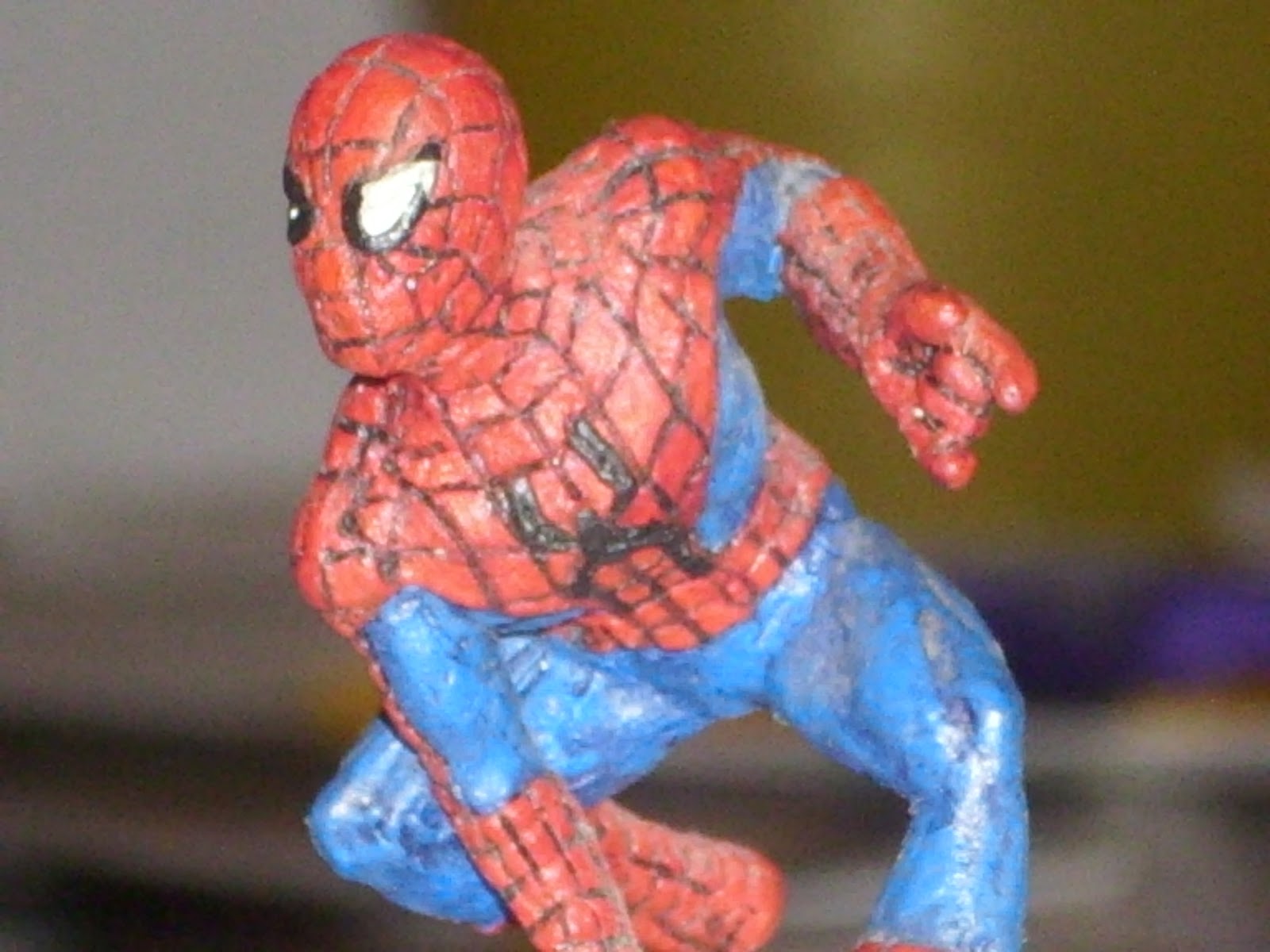
I've been taking pictures of some old miniatures I pulled out of storage recently. Well, I didn't exactly mean to go digging around for miniatures, but, a couple of weeks ago when I was pulling bikes out of the garage, I noticed that the clasps on my miniature case had, um, exploded. From the heat. Not that it gets all that hot in the garage, but the case was on top of a stack of boxes that stopped just under a window, so it had been in  the sun all summer. The case is old (like 20 years old) and plastic, so I suppose the daily exposure to the sun caused the clasps to shatter. I brought it in to make sure the miniatures were okay (they were) and decided I should get some pictures up on Facebook with my other miniature pictures. [I think this link should allow anyone that wants to see what I've posted so far to see. I think.]

[But here's a teaser:


All of that to say, "I hate my camera." It's old, and it's wearing out. It often refuses to focus. I can hear the mechanism inside trying, but it just won't do it. Then, of course, there was the whole episode while at Disneyland when the camera refused to even turn on.

But it's what I have at the moment, so I do the best I can with it. Yeah, I could go buy a new one, but I don't want to just go out and buy another cheap camera that wouldn't really be any better than this one, so I'm working with the one I have until we can actually get something better.

And that's how life is a lot of the time. You do what you can with what you have rather than just do nothing. Not that some people don't choose to just do nothing, but how much sense does that really make? When you wait for everything to be "perfect," you don't ever do anything.

I mean, for most of us, owning a car is always like this. You drive the piece of crap you have, right? Do you ever really go outside to go to work and look at your car and think, "I can't go to work in this. I'll wait till I have a better car, a new car, before I go to work." If you don't go to work, that new car will never happen, so you make do with the car that ought to be wearing a diaper and needs chemo for the cancer it has because it won't quit smoking.

All of this goes for writing and everything related to writing. You do what you can with what you have at the moment and keep trying to make it better. Better by degrees. And you learn from it.

When I finished The House on the Corner, I didn't have any money to pay for anything like, oh, a cover or marketing or anything. Which is still true, but, you know, doing the best I can. Anyway, I'd finished it and, after some research, knew I wasn't interested in pursuing traditional publishing, so it was time to do the best I could, which was this:
It's  not what I wanted, but it's what I had, so I went with it rather than not drive to work, as it were. The thing is, if I hadn't gone with that, I would never have gotten to this:
Better by degrees.

It can be hard to look at what other people have and look at what you have and decide to keep going. It would be so much easier to just give up. Let the piece of crap in the driveway continue to sit in the driveway and hide in your house because you're too ashamed to be seen driving around in that book with no cover.

And I have to mention it: editing.

Editing is a big deal. A poorly edited book can be a huge issue for a lot of people. BUT! As hard as I seem to be on the whole editing thing sometimes, I'm not as bad as I sound. As I said back in this post, my real issue is with people who have the "I'm not gonna leave the house" attitude about editing. "I could do better, but I'm going to choose not to because it's too much trouble." That bothers me. If you have a good story, it's well written, and you've utilized all of you editing avenues, you should not stick your book in a drawer because it doesn't look good. Drive that "piece of crap" (being metaphorical here -- I don't mean it's a piece of crap necessarily) to work, just like I drove my coverless book, and keep making it better by degrees. As you learn new things or have more resources, make it better. Make it the best that it can be at any given moment.

That's all anyone can do -- the best you can with what you have at any given moment. And don't be intimidated by the fact that some people have better than you. Some people just start out with more. No, it's not fair, but that's how life is. It shouldn't stop you from doing the best that you can right now.

end of line...

But don't forget to come back tomorrow for the FREE! release of part 6 of Shadow Spinner:

Wednesday, September 12, 2012

On Grammar and Punctuation: Most People Do It Wrong

As I've mentioned, now that school is back in session, I'm teaching my creative writing class again. It's going to be different this year, though, as I will be teaching two days instead of one, and one of those days will be devoted to the technical aspect of writing. Story structure. Plot. And, yes, grammar and punctuation. I expect that I will start having more posts, um, start having posts devoted to these topics as we (my class and I) go through the year. Actually, I already have a post started all about that wily rascal, the comma, and class hasn't even started, yet. [Okay, actually it has, but I wrote this before it had.] Oh, and there was that post about adverbs which has actually been sitting around for a long while. See, these posts aren't being inspired by  the class; they're being inspired by the lack of correct grammar and punctuation I'm seeing all the time in people's projects and the tendency of said people to just brush it off.

Now, look back up at my title of this post. No, really, read it again. Do you see it? I'm guessing most of you don't see it. Actually, I'm guessing that none of you see it, but, hey, I could be wrong. If you see the problem, raise your hand. Anyone? It's wrong. Specifically, "wrong" is wrong. The word in that spot should be an adverb, because it's (supposed) to be modifying how people do it. The appropriate wording would be, "Most people do it incorrectly."

Why do I bring this stuff up? Aren't grammar and punctuation subjective? Can't you just kind of do it however you want to? No, not really, despite what a lot of people, including some (bad) editors, would have you believe. There are rules for grammar and punctuation for a reason, and, frankly, I'm getting tired of seeing comments like this from authors:
"I write first person because that way I don't have to know any of the grammar rules."
I'm sorry; that's just lazy and irresponsible, and, honestly, if you can't take the time to learn the rules of your job, then you shouldn't be allowed to write.
The problem, though, is that editors, also, don't want to learn the rules of their jobs, and publishers don't care as long as they're going to make money, and more and more of them are cutting back on the editorial staff to increase profits and "allow the audience to get involved in the editing." (Yes, that's a real quote from a real publisher (but I'm  not gonna say which one).)
While we're at it, why don't we let drivers get involved in the process of building cars. Without training.

So, yeah, I'm being kind of ranty, but the attitudes around this stuff are (frequently) just wrong! (And, see, that time the "wrong" is correct, because it's an adjective telling what kind of attitudes. Wrong ones!)

Here are two things that I've experienced recently that I want to point to:

1. In providing feedback about a manuscript recently, I made a punctuation error. Yeah, I did, because no one, and I mean no one, is ever 100%. Part of it was just that I don't go back and proof blog posts and emails and things like that quite as thoroughly as I do a work I mean to publish. I just don't have the time to proofread these things quite as fanatically as I will something I want someone to buy. Part of it was just that I was having a brain fart and was thinking about the word incorrectly, so I punctuated "although" in the manner that you should punctuate "however." All in all, it was a relatively minor mistake, and it wasn't a repetitive mistake; it was a singular slip. However, I made this error while providing grammar correction to someone. And there were a lot of corrections in the other manuscript, and they were all repetitive mistakes. See, that means the person in question didn't know what s/he was doing and needed someone else to say, "Hey, you're doing this incorrectly," or, in the vernacular, "You're doing this wrong." A third party responded by pointing out my mistake and saying that I had no business offering grammar corrections, because, LOOK!, I'd made one, too. Basically, if I couldn't be 100%, I had no business giving advice.

That is a ludicrous statement. In fact, if you take that out to its full implication, no one would ever be able to teach anything. Because why? Because no one is ever 100%. Not all the time. If I'm operating at, say, a 90% capacity and you're operating at, say, a 30% capacity, it's just ridiculous to make the statement that I shouldn't be allowed to make the assist on you getting better. This attitude of having to be at 100% just supports the idea that anyone can do whatever they want any way they want to because there's no one qualified to make them better. HOW STUPID! I just want to say: take the help you can get and the help that's offered and learn as much as you can. If you can see that someone else is more qualified than you, don't be a dunce and dismiss him/her because s/he's not 100% qualified.

2. Someone recently posted her first chapter and asked for feedback on it. Now, this was supposed to be in "final" condition. As in, she was getting ready to send it off and was asking for final thoughts. This also means that she was "finished" with her editing process, whatever that was. I'm assuming, based on comments, that it included feedback from critique partners. I figured I might as well give it a glance. I was barely able to do that.

The very first sentence had a punctuation error in it. And, I have to say, it was one of those that is really beginning to bug me, because I see it everywhere. Still, I thought, maybe it was just a slip, so I kept reading. The piece was full of errors. The dialogue was rarely punctuated correctly, and every instance of the type of sentence like the first sentence was punctuated in the same incorrect manner. Clearly, the piece needed editing, and I only made it about 1/3 of the way through before giving up. I left a comment noting the error in the first sentence and stating that I was unable to finish the piece because of all the errors.

The author asked for examples. Well, I felt I'd already given an example, so I related to her that I was busy editing another piece for someone, but I would try to give her 1st chapter a pass when I was done with the other project. Her response was, "Oh, no, I have critique partners for that; I just wanted an example of the punctuation errors you were talking about."

Clearly, her critique partners had failed at their job.

And that's the point, really: "Most people do it wrong." Critique partners when used as editors are entirely overrated, because, honestly, they don't know any more than you do. If you think you're going to get what passes as editing from your critique partners, you're going to be incredibly disappointed in almost every instance. They can't catch those comma errors, because they don't know they are errors. Do you know, without looking it up, the difference between a coordinating conjunction and a subordinating one? I guarantee you, your CPs don't have any more clue than you. And that's an easy thing.

While it's true that grammar and punctuation and, heck, language change over time, that does not mean that it's subjective. That just means it changes. Speech changes, and writing changes along with it to reflect those changes, but that doesn't mean that it's subjective, although there are often cases where rules can be argued (But that's just like science. Remember, science still doesn't know what glass is). Rules exist in grammar for a reason and while, yes, fiction is allowed to play with those rules more than non-fiction, it's not a reason not to know them or to break them because you don't know them.

I get that writing how we talk is all in vogue, right now. The first person experience has become this holy  thing and everyone is getting on board, but what comes out of it is a lot of garbage because people don't actually know how to write. First person has become the short cut to actually doing the work, and, yes, that bothers me. Writing, even first person writing, is not like speech. It shouldn't be. Writing is a separate discipline, and it should be treated as such.

I'm going to end this with a quote by C. S. Lewis. Specifically, he's speaking here about using italics in writing, but the idea can be expanded to all of writing, especially 1st person writing:

I am now inclined to think that this was a mistake - an undesirable hybrid between the art of speaking and the art of writing. A talker ought to use variations of voice for emphasis because his medium naturally lends itself to that method: but a writer ought not to use italics for the same purpose. He has his own, different, means of bringing out the key words and ought to use them.

What this really says to me is that a writer should learn to write. A writer should not be someone that just copies down what people say. Speaking and writing are different and should be different. Make words your tools and learn how to use them.

Sunday, July 22, 2012

Unexpected Applause: the After

I'm going to do something a little bit different with this review in that I'm also going to review the author, at least I am to an extent. Book reviews really aren't about he authors but about their products, but I really feel like talking about the author of this one a bit.

One of the things I see most frequently as a "rule of blogging" is to keep your posts short. I get it. I do. At least, I get the idea of it. I don't really agree with it, though. I don't agree with it for this reason: most short posts I see just don't say anything. At best, they talk about the idea of talking about something, but, because the blogger is trying to keep the post short, s/he never more than touches on a subject. Maybe s/he gives a list about the topic, but, honestly, a list doesn't say anything. They're good for a trip to the store but that's about it. The end result is that I don't tend to short posts or spend much more time on them than it takes to scan through it.

Briane Pagel is the only blogger I know that routinely writes longer posts than me. And not just on one blog! Briane writes about half a dozen different blogs, is a lawyer, and has twin 5-year-old sons. And writes books! He's by far the most prolific person I've ever known, and it wouldn't surprise me if, one day, his body of work surpasses Asimov's (generally considered the most prolific author to have ever lived). However, I think Briane is also one of the most overlooked bloggers I know. People are daunted by his long posts, and I think it's their loss. It's unfortunate that so many people are willing to not invest in worthwhile things. Like taking the time to prepare a meal rather than just heating up processed crap. What I'm saying here is that the time you would spend reading half a dozen other posts would be better spent reading one of Briane's posts.

Often Briane is like Kevin Smith, and I like that. Not just that Kevin is dialogue heavy, which I like, but the way that Kevin talks is how Briane writes. Have you ever seen any of Smith's Q&A DVDs? If not, you should go get one and watch it. It's a simple format: someone asks a question; Kevin answers it. But it's how Kevin answers the questions that make it so great. Often (almost every time), he'll go off on some tangent and, then, another, and, sometimes, another, and you're left thinking, "Where in the heck is this going? What in the world could it have to do with the original question?" But he always gets back to that question, and, when he does, there are great "ah-ha!" moments where you see how all of the tangents fold together to make that one story and how a simple answer to the question in no way would have been as satisfying as the story he told. And that's Briane Pagel.

And he has six blogs, so there's bound to be something that you'll like. I follow two of them myself: Thinking The Lions and The Best of Everything. Seriously, you should go check out his list of blogs and try a couple or few out. Don't be daunted by the length of the posts. They're worth the time.

Other than the blog stuff, Briane writes books. I've previously reviewed some of his other works (Eclipse and his Xmas story), and I just finished his latest release, the After.
Considering that this is the third book by him that I'm reviewing, not to mention hyping his blogs, you may make the assumption that I like his work. You may even make the assumption that I really like his work, and you would not be wrong.

So, as usual, let's start with the technicals and get the bad stuff out of the way. Briane's not much of an editor. He admits that he doesn't find it to be fun so doesn't spend much time on it. Fortunately for him, he's really very good without the editing. I'm pretty sure he doesn't do any editing on his blog posts, and they don't tend to have more than the occasional typo. the After, though, could have used some more editing. A lot more in all actuality. On the plus side, there are no consistent errors caused by not knowing any particular grammar rule, but there are lots and lots of left out words, wrong words, and just plain typing errors. There's also an issue with the formatting. The big issue, for me anyway, was that he gets the character names mixed around a few times, especially with Ansel and Austin, which caused me to have to go back and make sure I knew what was being said before I could go on. Due to the sheer number of errors, I'd have to give a "D" on the technicals.

So, if you are a person that has a problem getting into a story due to these kinds of things as I usually am, you may need to skip this one.

Pay attention to what I said though: "usually am." Generally speaking, poor editing is a big roadblock for me, but not this time. Briane's story sucked me right in. His main character, Saoirse, is easy to identify with, empathize with. You want to know what's going on with her. And I don't really want to say more than that, because you should really just experience it for yourself.

Be aware, though, that this is no straight forward story that takes you from point A to point B and you have everything laid out for you by the end. Briane doesn't really write that way. There is much of the surreal in this book, and, as in Eclipse, you don't always know what's real and what's not. But that's okay, because the After is not about the destination; it's about the journey, and all that's really ever important is what's happening at that given moment. It doesn't matter what's real or not, because what is "real" anyway? And that is one of the big questions in the book, "what is real?"

There is an answer. Or, at least, what I'm taking as an answer. But I'm not going to tell you what it is. Maybe, you know, after you read the book, we can sit down and discuss what you got out of it and compare it to what I got out of it, but I'm not going to tell you going in, because, then, you'll just be looking for my answer, and I wouldn't want to ruin the journey for you in  that way.

Hmm... in many ways, reading this book is like looking at an impressionist painting, especially Van Gogh. In fact, there is one scene that made me feel like I was looking at The Starry Night while I was reading it.

At any rate, I would call this a beautiful book that needs to be read by the more than just the few people that have read it so far. The story is so strong, in fact, that it far outweighs the poor editing, and I give the book a "B" overall. This is the kind of book that really makes me sad to have to even point out the editing/formatting issues, but I'd hate for anyone to pick it up and not be able to get into because of that, especially on my recommendation if that's actually going to be a stumbling block. However, it's only $0.99, so, you know, for less than a buck, you have nothing to lose. Okay, so you'd lose a dollar, but it's worth so much more than a $1.00 that it's worth the risk.

Tuesday, June 12, 2012

The Picasso Syndrome and the First Person

I'm jumping back again to an older post I hadn't gotten around to finishing, but, since I was just talking about Picasso here, I figured I'd go back to the post that inspired the Picasso comment and finish it up.

But let's get into some history, first:

Picasso showed skill and interest in art at an early age, so much so that his father started him on formal training at age seven, much to the detriment of his regular school work. Picasso was admitted into the advanced class at the School of Fine Arts in Barcelona at just 13. Not only was he much younger than the average student of that level, but he completed the entrance exam in just one week, a process that usually took an entire month. At 16, Picasso was admitted into Madrid's Royal Academy of San Fernando, Italy's most prestigious art school.

All of that to say that Picasso was no slouch in the art department. He was classically trained and, possibly, the greatest classical artist of his day. The problem was that it bored him. He wanted to do something new and different, and that lead to experimentation and the development of many new art styles, especially Cubism. Cubism was born from a desire to go where no other artist had gone before not because Picasso couldn't draw. So to speak.

Of course, there were two responses to Cubism:
1. People hated it. Especially traditionalists. It was viewed as trash that no "respectable" artist would even deign to recognize. They didn't understand it.
2. People loved it. It was new and exciting, something that had never been done before. They didn't understand it, either, but they tried to. People are still arguing over what Picasso's paintings mean.

Of course, the most important response to Picasso, other than the group trying to ignore he existed, was to imitate him. After all, it looked easy enough. Just paint some weird stuff that people couldn't understand, and you had it, right? No, not really. Most of what ended up happening was people painting weird crap that was just crap. Some of the crap was good enough, though, especially when it was all new and exciting, that it got elevated to art status, too.

Sometimes, the imitation was from people that could actually do "real" art ("real" art being art that's not just weird stuff that no one understands because it really has no meaning). These were people that saw Picasso as a visionary and wanted to follow after him. There is, after all, skill involved, even if the result is something that's weird. However, some of the imitation was by people that used Picasso as their reason to not bother to know how to do "real" art at all. They saw Picasso as the short cut. Basically, these are the people that were looking at Picasso and thinking, "That's crap. I can do that. And look at how much money that guy's making!" And they went about making crap and trying to get rich from it. Some of them did, of course. Most of them did not.

Which brings me to writing and the cult of 1st Person that's going on these days.

Over the centuries, fiction writing has mostly happened in 3rd person. I suppose it developed that way because it seems more logical. You're telling a story about someone that's not you, so you tell it that way, "that way" being 3rd person. [Interestingly enough, the book that's most widely considered the first (Western) novel, Pamela, is written in 1st person.] From that perspective (the centuries of 3rd person writing perspective), I can understand the attraction to writing in 1st person, especially 1st person present; it feels new and exciting!

However, 1st Person is the new Cubism in that people are using it as a short cut to actually knowing how to write. The idea that you can write it from the perspective of your character is very attractive, because, if you make mistakes, you can chalk it up to being "the way the character talks." And, since it's 1st person, the whole thing is "the way the character talks." It's a nice bit of sleight-of-hand, and other people who don't know the rules (the readers) often fall for it.

I didn't really really become aware of this issue until I started teaching the creative writing class that lead to this (yes, go back and read that post if you haven't already). Their very first assignment was to introduce me to a character. I used the first of my Tib stories, "The Tunnel" (hopefully, this will be available again soon (I'm waiting for art)), as my example of character introduction. "The Tunnel" is written in 3rd person; everything I got back was 1st person (which wasn't a problem in and of itself). But that's not what did it. One of the stories I got back introduced about five different characters, and they were all written in 1st person, and the author hadn't included any cues in the story to let the reader know that we'd switched to some other character. Much discussion followed.

And this is when I became aware that everything they (they being the kids in my class (minus my son, because he's reading a different class of books)) were reading was YA stuff written in 1st person. But it was really through blog interactions that I realized that the reason everything they were reading was in 1st person was because it's just all in 1st person these days. And 1st person present on top of everything else. And that's when I started understanding why I kept coming across comments like, "That's just how my character talks" on various blogs.

It really hit me, though, when I looked at a couple of writing samples from a couple of people. Both were written 1st person present, and both were full of grammar and punctuation errors, and, when I pointed them out, I got the "that's the way my character talks" response, but, when I looked at their blogs, I found out, no, that's just the way they wrote, and neither of them were interested in fixing the mistakes or learning how to not make those mistakes. Neither of those are blogs I follow anymore, because, really, I don't have time for people that are bad writers and blow it off as being the character, especially when their characters were not writing their blogs.

Personal responsibility, people!

And this is where it gets difficult. I don't actually have anything against 1st person writing. I mean, I wrote The House on the Corner (mostly) in 1st person. Of course, at the time, if I'd realized how endemic 1st person had become, I wouldn't have done it that way, but I was experimenting with what I remembered about The Pigman (you can read all about that here) and didn't realize that 1st person writing was taking hold of the marketplace. Which is why I have such an issue with 1st person writing.

No, not because it's everywhere; however, because it's everywhere, I see, more and more, how many people are using it as an excuse to allow sloppy writing and brushing it off as just being the character. And I'm not just  talking about independently published works, because the problem is rampant in traditionally published works, too.

For example:

Percy Jackson: I only read the first one of these, but there's very little chance I'll go back and read anymore of them. Riordan used the fact that it was 1st person to have his character tell us what we should believe about him as a person but used the action to tell us a different story about the character. The two things were at odds with each other, yet we were supposed to believe what the character said about himself for no better reason than he said to.

Miss Peregrine (which I reviewed here) also does the same thing with the character telling us what to believe even when his actions don't support those things. It's just sloppy, lazy writing.

I'd give more examples, but I have not been overly inclined to read any more of the current generation of 1st person YA books coming out. My experience, thus far, has not been a positive one. Add to that the fact that people want to use their 1st person storytelling as an excuse for bad grammar (and I'm sure I'm gaining a reputation for my stance on grammar and punctuation), and I'm not in favor of 1st person writing. It's just not where people should start their writing careers.

I understand the attraction. I do. It's so easy to just write away and believe that you're writing from the standpoint of your character rather than yourself; it's a problem in 3rd person, too (in fact, I'm reading a book in 3rd person, right now, in which none of the characters are distinguishable from each other), but the temptation is so much stronger in 1st, because everything you write is that one character, and it's easy to fall into the trap that that voice you're writing in is your character's instead of your own. At least, with 3rd person, you have the ability to distinguish between the narration and the dialogue.


At any rate, I'm ready for the fad of lazy 1st person writing to slip past us. I'm also waiting for editing to make a comeback. Seriously. I was just reading an article on CNN last week about how copy editing is one of the quickest shrinking fields, right now. Properly edited work is considered "too expensive," so publishers are cutting costs by letting their editors go.

But that's not an excuse for those of us in the "indie" publishing world to do the same. In fact, it's every reason to rise above the mainstream. Show you care enough about your writing to know how to do it. And, if you don't know how to do it, get help from someone that does. Don't let your 1st person writing be your excuse for bad grammar and lousy punctuation.

Tuesday, December 13, 2011

Editing Christmas

As I've mentioned before, I hate editing. I mean, it's like the least fun thing in the world to do. Sort of like geometry. Or, at least, geometry in my high school geometry class. I've heard that in other places it isn't as bad as that was. [Just a note: I excelled in geometry (ending the year with greater than 100% in the class (even having episodes where getting 100% on a test would bring my grade down)), but I hated it all the same.] I want everything the way I want it the first time and going back and having to pull things out and add new things in is absolutely no fun for me. And you people out there that like to write fast and dirty and fix everything in the editing...? You people are insane! I mean that.
By the way, George Lucas believes movies are made in the editing room. To him, filming is analogous to gathering your materials, but you actually build your movie in the editing room. But writing isn't a movie, and I don't like editing.

We got our Christmas tree this past weekend. The arrival of the tree each year always means jiggling things around. Of course, at the old place, it was jiggling things around in the same way every year. There was really only one place in the apartment that the tree could go, and we'd just clear that spot out for it, stick it in, and, a few weeks later, pull it back out. This year, though, is different. We don't have a place for the tree to be. Not an established place. We don't really have the house arranged the way we want it, yet. Part of the reason is because of Christmas; we knew we'd have to re-arrange anyway, so we just put furniture where it would work till we got to where we are now.

But we're here, now. Or we were a few nights ago.

The living room was still in rough draft form, but we'd kind of gotten used to it. Isn't it interesting how quickly that happens? But we had this new scene, the Christmas tree, that had to be edited in. But the tree was making the word count too high. Clearly, some things had to go. A lot of it was stuff that should have been taken out already -- extra words in the form of boxes with knick-knacks and stuff (like packing tape and tools). Some was just stuff that needed to be moved. Like the piano. We'd thought we had it where we wanted it, initially, but it was becoming more and more clear that it needed to be shifted. We just hadn't gotten to it. However, some of it was stuff I'm attached to but clearly had to go to serve the higher purpose of including the Christmas tree in the new draft of the living room. You know those bits in your writing that you really like, but they don't do anything for the story? Yeah, those... the ones you just want to leave in for your own benefit even though they detract from the aesthetic of the overall work.

Needless to say, the editing project didn't go as smoothly as my wife and I would have liked. But we got through it, and the room is sort of the way we want it. Maybe. Actually, I suspect, there will be some more tweaking. As my wife says, our furniture is fat. We've been trying to get the couch and, especially, the matching chair to lose some weight, but it hasn't been very effective so far.

And the actual decorations aren't up, yet. Just the tree. So there's still some polishing of this draft to do. Hypothetically, the decorations go up tonight.

But!
There's always a but...

Not only do we have this new scene in the living room chapter, but we have this whole new plot thread in the form of our dog. Including convincing her that she'd rather drink from her own water bowl rather than the Christmas tree stand. How's that for conflict for you? That aside, she's been weaving her way into the overall structure of the piece, and it's working out nicely.
[And just in case you've forgotten what she looks like, here's a gratuitous picture of her keeping warm:

Part of all of this is knowing your audience. I mean, if it was just me, I wouldn't decorate at all. Or have a tree. Although I like the tree and the decorations, that stuff is somewhat like eating crawfish: too much work for what you get out of it. I don't care how good it tastes. I'd just go around looking at other people's decorations, and I'd be fine with it. But I have these children, my audience, and they like all this stuff. In fact, there would be massive protests if we didn't have a tree, possibly even riots. There'd probably be an Occupy Dad movement or maybe even a coup. So, knowing my audience, I edit the room, and, this year, the front of the house, too (this will be our first time since we couldn't decorate the outside of our place at the apartment). See, the amount of editing required largely depends upon your audience.

Anyway... that was my deep thought of the weekend. I'm not really sure if there's a point other  than making the comparison, so take from it what you will.
Merry Christmas!
And good luck with your editing. I mean decorating!

Friday, October 21, 2011

Do We Really Prefer Author's Preferred?

Roughly ten years ago, American Gods was released. The book won a lot of awards in a lot of different categories leading Neil Gaiman to believe that people don't really know what to make of his book. Having been such a big deal, the publisher wanted to release a special 10th anniversary edition, and Gaiman requested that he get to put back in about 12,000 words that had been edited out of the first edition. The publisher agreed, so we now have an "author's preferred text" edition of American Gods. I want to read it.

Why? I really don't know. It's not rational. Despite having thoroughly enjoyed it the first time through (and enjoying Anansi Boys even more), I've had no desire to go back and re-read it. I don't do a lot of re-reading (mostly because there are too many books I haven't read for the first time, yet), so the thought of re-reading Gods had never entered my head. But, despite reviews that mostly say there's nothing significant added back in, and despite the fact that it's been so long since I read it the first time that I wouldn't recognize any changes, anyway, I want to read this new edition. Even Gaiman says, based on how well the book sold, that his editor was probably correct in having him cut the 10,000+ words, but, yet, he wanted them back in the book. So, even though the book might actually be better for the lack of a dozen thousand words, I want to read the book that Gaiman intended it to be before the publishers and their editor got a hold of it.

It's not just Gaiman, either. I'm a sucker for any author's preferred edition of a book or director's cut of a movie. I have an innate distaste for someone coming in from the outside and imposing their view upon an artist. Any artist of any sort. Because who's to say that an editor's opinion will actually improve the work? Not that I don't understand the necessity of editors. Especially in movies. And in writing. I mean, you need someone with a different perspective to come in and ask questions sometimes. "What does this mean?" "What's happening here?" "How did we get to this part over here from where we were over there?" Things the author may miss because they exist in his head, and he can't see that he left a piece out for everyone else. But all of that is different from the specific type of editing I'm getting at. The part where someone comes in and says "change this" or "this is too long, cut this stuff out" or... well, there are too many ors.

 Maybe that's why I like Kevin Smith so much. He does it all himself, and his movies, for better or worse, really are his movies. He writes them, directs them, edits them all to his own vision. I appreciate that.

But does my preference for the author's (or director's) original vision translate to the culture at large? Actually, I think the mass of population really doesn't care. As an audience, we tend to pretend that this whole editing process doesn't happen. We like to believe that what we read is what the author intended for us to read. What we see is the director's vision of how the movie should be and not the studio's vision. But, then, there are a lot of movies out there with director's cuts options, although, mostly, those are just aimed at people that already own the movie and like it enough to double dip so they can see the differences between the two versions. I know I'm guilty.

Still... at some level, I think people do care. When they stop to think about it. If given the choice, people will pick the author's vision over the publisher's vision (or the director's vision over the studio's). I have a lot of supposition here, but what I know is that they keep releasing director's cuts and (to a lesser extent) author's preferred editions. They wouldn't do that if people weren't buying them, right? Right? I suppose the real question is who is buying them? Or maybe that doesn't matter.

I suppose my point lies somewhere in here: people don't read. Half of American adults do not read books. At all. Only about half of households buy even one book a year (some buy more, but that other half doesn't buy any). Even of college graduates, half of them will never read another book after graduation. And here's where it really makes me start to cringe (and this is based on memory (I couldn't find the article again)), only about 1/3 of adults in the USA consider themselves to be readers, and most of them (a huge most) will only read one book a year. One book. In a whole year. I have a hard time with this. Then, again, I have a brother who has never finished a book in his entire life. The closest he got was Adventures of Huckleberry Finn during high school, but he didn't finish it before the test, so he didn't finish it. Yes, this means he hasn't read my book, The House on the Corner, and I'm not expecting that he ever will. At any rate, these are the people that will say things like "it was too long" as a reason for not finishing or not ever picking up a book.

And, yet, this is the target audience for editors when they say, "Hey, your book is too long." Or "If you want more people to buy your book, you need to change x, y, and z." Why do we try to tailor books for these people? These are not the people that are buying most books. Certainly not the people reading most books. Remember that 50% of households and how they buy only one book a year? 50% of those books will go unread. These are not the people going back to buy the author's preferred edition.

The people going back to buy the book for a second time are people that read. And I don't mean one book a year people, I mean people that read. [I did try to find a statistic for people that read more than, say, 3 books a year, but I continued to just find more and more data about how 50% of Americans don't read at all. It got depressing, so I quit looking.] My impression is that most readers, when they find a story they love, want it to keep going. So, yes, when an author's preferred edition comes out with an extra 10,000 words, they want to read it. It may not be rational, but the desire is there.

To be completely honest, I haven't experienced an author's preferred edition that was really worth buying the book twice for, but I would have preferred to have had the author's version the first time. And I've only seen one director's cut of a movie that I thought was a significant improvement over the original: Daredevil. But, then, I liked the original; I just like the director's cut more. In fact, if I'm going to have a super hero movie on in the background, the director's cut of Daredevil is my choice. But, with most movies, it's nothing more than an interesting comparison. And, unfortunately, the director's cut of Highlander II did (very) little to improve it, even if they did cut out all mentions of Zeist. The main "improvement" of an author's edition is that it allows the reader to stay immersed for a greater length of time. Maybe that's all the improvement that's needed? Certainly, that's the reason that supplemental texts to The Lord of the Rings continue to be released. Lovers of Middle-Earth just want more of it. And Tolkien's publishers told him it was too long. (Not to mention the extended cuts of the movies.)

At the core, especially for Americans, I think we all want to see what the author intended for us to see. Maybe, MAYBE, more people would read if we let authors write their own stories instead of letting editors and publishers tell the author what they think the author should be writing. We certainly couldn't do worse. We have so many people saying "this is what people want," "this is what you need to write," "this is what you need to make" that everything is the same and no one wants any of it. Okay, that's not precisely true, but the things that really make it are the things that people that "know" said would never work. Like Harry Potter. People want to see the vision of the author (or director) for the story, not what the publisher (or studio) believes people want to see (I could go into Sony's insistence on the inclusion of Venom in Spider-Man 3 and how most people feel about that movie, but I think we just assume that conversation and skip it).

The fact that we have people that are willing to go back and buy what is essentially the same product twice so that they can experience a story the way the creator of the story intended it to be experienced says a lot to me. Primarily, it says that publishers should allow authors greater creative freedom. Publishers should stop trying to make everything fit into specific molds. Authors are good enough at following the popular route on their own that they don't really need any help from publishers in that. Or, you know, maybe it's all a scheme from the publishers... edit books down to fit arbitrary criteria so that, later, they can release the author's preferred text and make money twice. Don't laugh. I wouldn't put it past them!

Deleted scene:
In the spirit of the whole author's preferred text idea, I'm going to share a paragraph that got cut out. It's a good paragraph, but my post changed directions about halfway through, and, when I went back and re-structured the whole thing, the paragraph really didn't fit back in.

 Books, as they've been for at least the past many decades, are not the work of the author. Not just the author, at any rate. Yes, the author writes the book, but, once a publisher agrees to publish the book, it becomes subject to editing by the publisher. I'm not saying that this is necessarily a bad thing. By all accounts, many of the people we view as the greats could never have been published without the assistance of one or more editors to get their manuscripts into the kind of shape that would enable an audience to read said manuscript. I think it was Faulkner (although I may be misremembering) that was notorious for turning in piles of pages with just one or two words on them each and no way of knowing what order the pages belonged. Maybe that, in the end, explains his stream-of-consciousness writing.

There you go. A rare deletion from me. Rare because I don't often go back and completely re-write. I'm pretty good at knowing where I'm going when I start writing, but this post fooled me and changed directions causing me to have to go back and start over. However, it does give me this opportunity to include this cut bit even if the post is a day later than I intended it to be.

Wednesday, October 5, 2011

Editing Your Life

As I may have mentioned, we moved. Moving is a strange process. It starts out all nice and polite, but, in the end, it always gets ugly. Sometimes violent. It starts out as the army recruiter, all smiles and handshakes, and turns into the drill sergeant, all push-ups in the rain and mud.
And it did rain, too. I spent the last day unloading the truck in a nice drizzle.

In the beginning, the most important items are carefully boxed and moved in an orderly fashion from one dwelling to the other. The big things, not in size necessarily, but the things you can't live without. And I'm not talking toiletries here (because you can go out and buy a new toothbrush); I'm talking about the things that give your life meaning. The things where the value isn't always obvious to an outsider. During this process, you actively choose to cut some things loose. Things that, at one time, held meaning for you but no longer do. You pick it up, examine it, remember what it was to you, and decide to let it go. At first, this process is kind of enjoyable. Looking back over your life and making decisions about where to take it.

And there are, also, just the big things. The furniture. Beds. Which things go. Which things get tossed because "I always hated that table." Which things get replaced. And you move on down from there.

We have so many books. Some of them were still boxed up from the last move, and that was 8 years ago. Sorting through the books is a somewhat arduous process, but we just can't keep them all (as much as I would probably like to). We ended up with something like four big bags of books to trade in at the used book store and who knows how many that we donated (because they were either hardback (so the used book store wouldn't take them) or of a type that the used book store wouldn't be interested in), but it was more than what we're going to trade. And, still, we have sooo many books (and nowhere to put them (I imagine we're going to have even more boxes of books sitting around until our next move)). [Don't even ask me how many copies of the various Harry Potter books we had laying around. It was obscene. I -think- we have it cut down to one set of hardbacks, now.]

And don't get me started on the toys. Only the girls in the family are any good at letting go of those things. Even things that haven't been played with in years. But, to quote Tom from The House on the Corner, "Just because I haven't played with a toy in a few months doesn't mean I don't want it." And that's how my boys feel about their stuff, even if it has been years and even if it's trash. Yes, the older one, the one that's in high school, collects pieces of trash. As he puts it, "It's cool trash, Dad." We just won't tell him how much I threw away during this move, okay.

But the hardest things are the things we don't really want to get rid of but feel it's for the best. I have, well, had, this jacket. My best friend in college gave it to me. While we were in college. Yes, that makes the coat more than 15 years old. I loved it. Not because it was a great coat but because my friend gave it to me. He gave it to me because all I ever wore was this flimsy, red windbreaker. At the time (which is not the case, now), I was not often inclined to being cold, and, generally, the windbreaker was enough. But he felt like I should be more prepared for cold weather (and rightly so), so he bought me a coat for Christmas one year. After 15 years, it was falling apart. Literally. I couldn't risk washing it anymore, because it couldn't take it. And, being much more inclined to being cold these last few years, it no longer did the job of keeping me warm which was compounded by the fact that it had become much too large for me. No, not because it got bigger but because I've shrunk. Not gotten shorter, either. So I held it up, and my wife, who has been telling me for years that I should move on to a new coat, said, "You can keep it if you want it." And I wanted to. I told her I wanted to. But it wasn't useful anymore. In fact, it was just taking up space, even if it wasn't a whole lot of space. I realized it was time for it to go even though I did love it, and I made a final walk with it out to the dumpster, just me and the coat, and tossed it in. Yes, I'll miss that old coat, but, really, it no longer did the job for which it was intended and only had any meaning to me.

At the very end comes the "panic packing."* You know, when you're running out of time to get out of  the old place and the remaining things, although sometimes necessary items, are unimportant items. They could be replaced, but you just don't want to have to replace everything. At some point in there, my wife said to me, "We're at the point where anything that's not obviously trash is a keep," meaning just throw it into the closest box and it can be sorted later, and I said, "No, we're at the point where anything that isn't obviously a keep is trash." She laughed, but it was true.

Somewhere in between throwing out my jacket and the panic packing, I realized that the whole moving thing is like editing your manuscript. You start out by identifying the really important aspects and mark them as "keep." You go on to the pieces that support or make sense out of your overall work and mark them as "keep." Sometimes, you find some bit that you love or, even, really love, and realize that it actually doesn't serve any purpose and gets in the way of the story for other people. Because, really, when I wore my old, beloved coat, I looked somewhat homeless, and that's not the look you want when you're hanging out in the school playground waiting for your kids or, even, at the grocery store. Likewise, you don't want things in your writing that are distracting from your story just because you love it. In the end, you're slashing words left and right. You're doing searches for "really" and taking them all out, and, when you get really desperate, you're doing searches for "ly" and blasting every adverb you find.

Of course, when you get over to the new place, you realize you threw away some things you hadn't intended to. Or, for some, you threw them away on purpose because you needed a new and better one. So you start filling in the gaps. Some of those gaps will be adverbs. Because, you know, they're really not as evil as everyone says they are.

At any rate, what you hope for is a cleaner manuscript with a clearer purpose. Just like with moving. A cleaner, less cluttered home with a clearer purpose for the future. I can't even begin to convey to you how much trash we threw out. It starts with a full dumpster of stuff from our apartment and goes on from there.

Of course, going through everything, I realized that I live as a plotter. My wife is more of a pantser. I evaluate things as I go, so the things I have at the end are mostly things I want to keep. I do want to keep a lot, though, unfortunately. It makes decisions about what to get rid of much more difficult. My wife stores things up to go through later, so the tossing out becomes relatively easy for her. I could probably go into this in more detail, but it's really only a side thought, and I don't want to get punched by my wife.

So... here we are with a newly edited life. Not that we're through with the process. It's just the first pass, so to speak. There are still toys to deal with. They just don't all fit. It's like having too many words. Somehow, we have to get those toys down to the designated word count despite the protests of our boys. Not that I'm really one to have much respect for word count limitations. I believe in telling the story the way it needs to be told and to heck with the word count. That's sort of how we should live our lives, too. Not that we should clutter it up, but to heck with the limitations that others want to impose on us. Only you can live your life, and you should live it the way you want to do it (you know, as long as you're not infringing on someone else). And, if you're a writer, it's your book. Write your story the way you want it to be. Make it the story you want to read, because, in the end, that's all you can do with any certainty.

* Panic packing is a term my wife says she coined. I can't dispute this as the only other people I've heard use it are friends of hers whom she says got it from her.